Frequently asked questions
Everything buyers, IT leads, and compliance teams ask before signing.
How do we get started?
Book a discovery call. We spend 30 minutes mapping your top call categories, current telephony, CRM, and the rules a voice agent would need to follow. If there is a real fit, we move into a 3 to 4 week Pilot on a single call category. You see a working agent on your data, your CRM, and your numbers before any commitment to a full production build.
How is an AI voice agent different from an IVR or chatbot?
An AI voice agent holds a natural, real-time conversation. It understands intent, asks clarifying questions, retrieves data from your systems, takes actions such as booking, payment, or ticket creation, and hands off to a human with full context. IVRs are rigid menus. Chatbots are text-only. Softblues builds voice agents that combine speech recognition, large language models, and real-time voice synthesis to sound and behave like a trained agent.
How long does it take to deploy a voice agent?
Three phases, with a fixed time per phase. The Pilot on a single call category takes 3 to 4 weeks. The full Production build covering your top 3 to 5 call categories takes 6 to 8 weeks, with the first production call typically live within about 8 weeks of kickoff. An optional Managed Optimisation retainer runs continuously after go-live, covering tuning, QA, monitoring, compliance, and ongoing agent additions. You know the timeline before you sign.
How do you handle call recording, consent, and GDPR or UK DPA?
Deployments run on Google Cloud in the UK or EU region of your choice. Consent capture happens at the start of the call, recording retention is configurable per use case, and PII redaction is applied automatically before storage. We align with UK GDPR, the UK Data Protection Act, GDPR, ICO AI guidance, and the EU AI Act. PCI DSS controls for payment voice flows and HIPAA-eligible configurations for healthcare are both supported.
How do you integrate with our telephony and CRM?
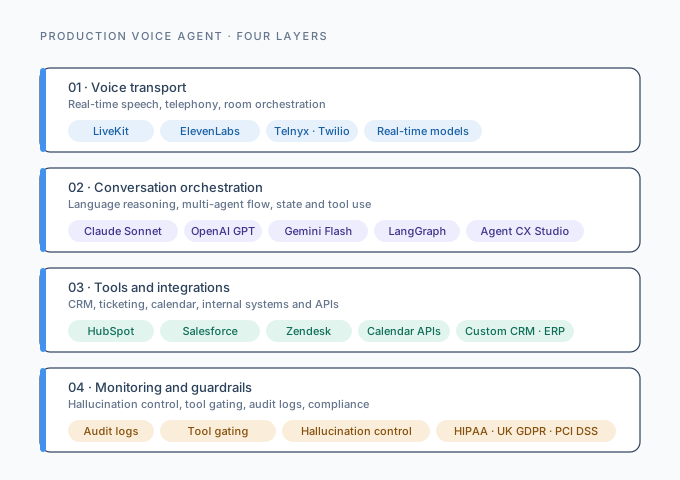
We connect through SIP trunks for PSTN, or directly with Twilio, Vonage, Genesys, Amazon Connect, Zoom, or Microsoft Teams. CRM and ticketing integration is built for Salesforce, HubSpot, Zendesk, ServiceNow, and custom APIs. The agent reads and writes records in real time during the call, including creating tickets, updating opportunities, and logging structured call summaries.
What is the latency like and does it feel natural?
End-to-end response latency is typically under 800 milliseconds, within the range of a natural human conversation. We use streaming speech-to-text, low-latency LLM inference, and streaming text-to-speech so the agent starts speaking as soon as it has a response, not after the whole reply is generated.
Do you build both inbound and outbound voice agents?
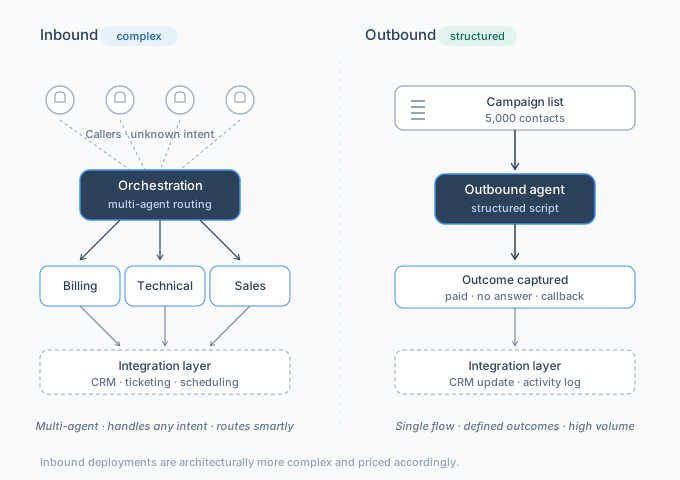
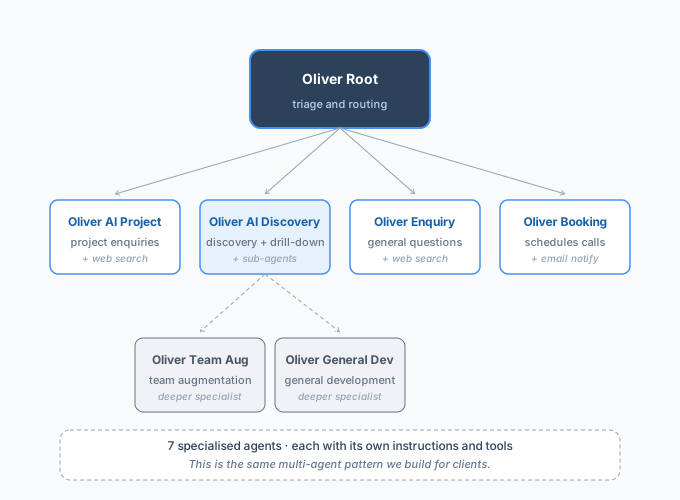
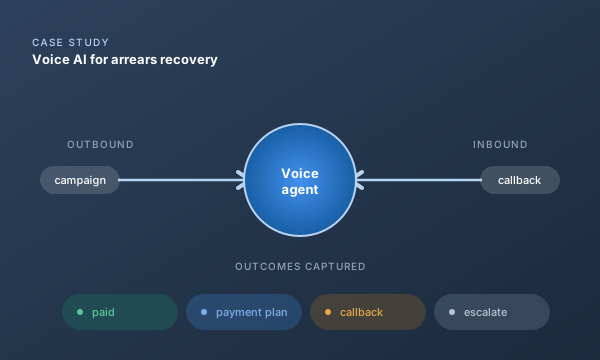
Yes. Inbound agents answer customer calls, handle support, take bookings, and route to humans. Outbound agents run campaigns: appointment reminders, lead qualification, payment collections, satisfaction surveys, no-show recovery. Both share the same underlying multi-agent architecture.
What languages and accents do you support?
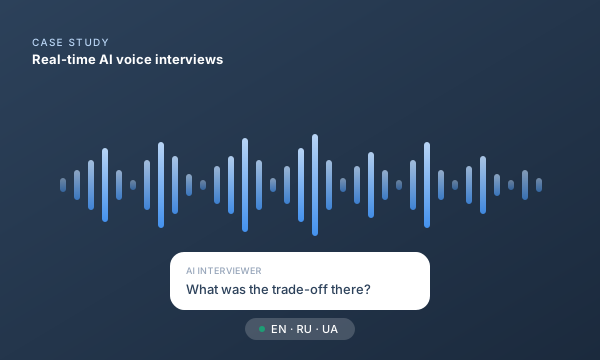
Our stack supports 40+ languages and regional accents, including direct audio-to-audio translation. We choose the speech-to-text, text-to-speech, and LLM combination that best fits your target markets. Deployments in English, German, French, Spanish, Italian, Polish, Ukrainian, Japanese, and Mandarin are all in production.