Healthcare · AI business automation
Six legal checks stand between a prescription and the patient. Today they take 15 minutes.
AI pharmacy automation, 15–20 minutes to seconds
This AI-powered pharmacy operations assistant runs the six federally mandated steps on every US prescription. Eight specialised agents now do that work, validated by ten pharmacists and experts, without dropping a check.
- Client
- US pharmacy-tech company
- Sector
- Healthcare
- Stage
- PoC validated · in beta
- Build
- Multi-agent, 8 agents
- Stack
- Google Cloud + Gemini
A $630bn industry under strain
US pharmacies fill 18 million prescriptions a day, and every one has to clear six legally mandated steps. The work is heavy and the systems are old. Pharmacists spend about 48% of their time on verification and 16% with patients, and most drug-interaction alerts never get read.
US prescriptions filled a day
Source: JAPhA time-motion studies; CDC PDMP research
Pharmacist burnout, higher than physicians
Source: 2023 pharmacy workforce burnout survey
Of drug-interaction alerts get overridden
Source: AHRQ clinical decision support research
The work behind every script
Six steps, all mandated
Every prescription has to pass through the same six operations before it reaches a patient. Five of the six are required by federal or state law.
| Step | Time | Mandate |
|---|---|---|
| 1. Prescription receipt and data entry | 2–5 min | Required · 74% need clarification |
| 2. Drug utilisation review (DUR) | 8–50 sec | OBRA '90 |
| 3. Insurance claim adjudication | 1–3 min | Required · prior auth can add hours to days |
| 4. PDMP query (controlled substances) | ~106 sec | 49 states |
| 5. Final verification (pharmacist only) | 8–24 sec | OBRA '90 |
| 6. Patient counselling | 1–5 min | OBRA '90 |
Sources: Journal of American Pharmacists Association time-motion studies; CDC PDMP research.
The opportunity
Give the time back to patients#
The maths is simple. A typical pharmacy fills around 1,375 prescriptions a week. Save ten seconds on each one and that is roughly 200 hours a year handed back to patient care.
The point was never to remove the pharmacist. OBRA '90 makes the pharmacist's judgement a legal requirement. The point was to take the routine reading off their plate, so their time goes where it matters.
AI can assist every step. The legal judgement stays with the pharmacist.
The hard part
Why pharmacy is hard to automate#
The client had a clear idea. The difficulty was everything around it: federal law, decades-old systems, and data you are not allowed to practise on.
Four walls in the way
Legacy pharmacy systems
Pharmacies run on systems like QS/1, which talk HL7 v2 over MLLP, a 1990s protocol with custom per-site message formats, VPN tunnels and no REST APIs. Cloud integration needs a middleware layer.
Authoritative data, everywhere
The clinical truth lives in separate sources: RxNorm for drug names, FDA OpenFDA for safety and recalls, DrugBank and DailyMed for interactions, and insurance formularies that often exist only as PDFs.
Healthcare compliance
HIPAA means encryption, audit logs, access controls and a signed BAA. OBRA '90 means AI can assist but not replace the pharmacist. 49 states each set their own PDMP rules.
No real patient data
You cannot build on real patient data, so everything was developed on synthetic prescriptions and validated by practising pharmacists, not engineers.
The bet
Could eight agents do the work of the workflow?#
We split the workflow into eight specialised agents, one per task, under a single Gemini 3.1 Pro orchestrator. We wired them to authoritative sources, RxNorm, FDA OpenFDA and formulary data, and generated synthetic prescriptions to test on, so no patient information was ever at risk.
Then we put it in front of a focus group of ten pharmacists, technicians and healthcare-IT specialists. They checked the OCR, the interaction analysis and the formulary checks. The verdict was positive, and we moved to beta with a live QS/1 integration over the Google Cloud Healthcare API, HIPAA-compliant from the start.
How it works
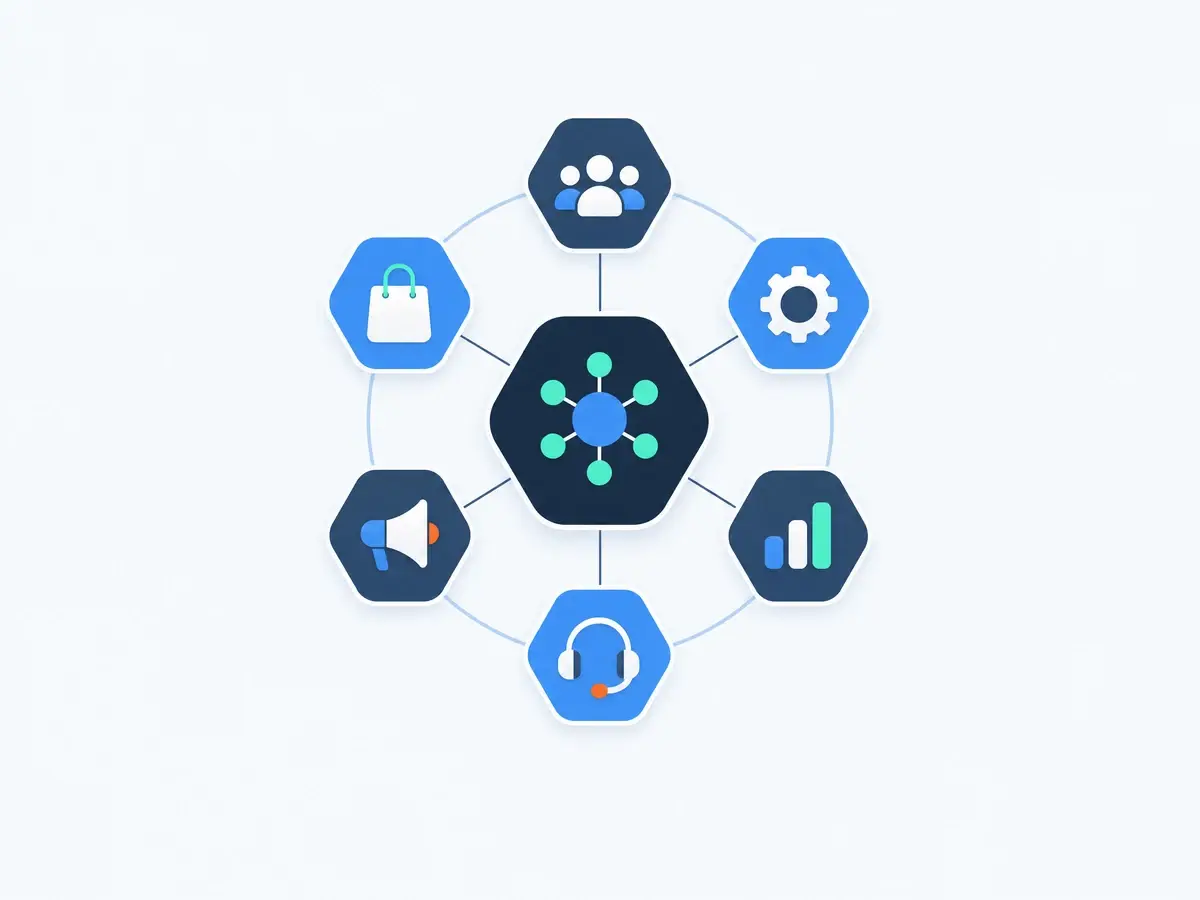
Eight agents, one orchestrator
- 1
Prescription classification
Identifies the prescription type and routes it into the right processing path.
- 2
Data extraction (OCR)
Reads handwritten, printed and faxed prescriptions and turns them into structured digital data, removing manual entry.
- 3
Drug safety verification
Checks interactions against FDA and drug databases, producing severity-tiered alerts instead of blanket warnings.
- 4
Dosage verification
Validates the prescribed dose against protocols and patient parameters.
- 5
Medical abbreviation
Expands and standardises the shorthand on a script so nothing is misread.
- 6
Insurance verification
Checks coverage and formulary status against live insurance data, not a static table.
- 7
Prior authorisation
Flags where prior authorisation is required and prepares the request, the step that otherwise adds hours to days.
- 8
Alternative medication
Suggests covered or clinically appropriate alternatives when the first choice is blocked.
See it in action
The platform, working
Prescription management dashboard
AI prescription recognition
Comprehensive prescription details
Drug-drug interaction analysis
Safety and insurance verification
Built with
- Cloud
- Google Cloud Platform · Cloud Healthcare API · Cloud SQL · BigQuery · Pub/Sub
- AI / ML
- Gemini 3.1 Pro (multi-agent orchestration)
- Integration
- HL7 v2 / MLLP Adapter · RxNorm · FDA OpenFDA · Formulary APIs
- Backend
- Python · FastAPI
- Security
- VPC Service Controls · CMEK encryption · Cloud VPN / IAM · HIPAA BAA
Where this platform sits
What the existing tools do, and don't
Most pharmacy tooling solves one slice of the workflow. This platform is built to combine prescription recognition, intelligent drug-utilisation review and insurance automation in one pipeline.
| Solution | AI drug review | Prescription OCR | Insurance |
|---|---|---|---|
| EHR platforms | Basic rules | No | No |
| Prior-auth tools | No | No | Prior auth only |
| Drug databases | Rules database | No | No |
| This platform | LLM-based | AI OCR | Full |
Competitive positioning from the market analysis. Categories, not specific vendors.
Results
What it delivers
The six-step workflow, compressed (target)
Specialised agents, one per step
Pharmacists and experts validated it
Alert fatigue targeted by severity-tiered alerts
Validated, then in beta
Ten pharmacists and healthcare professionals validated the accuracy on synthetic data. The platform is now in beta on a live QS/1 integration, built HIPAA-compliant from the start.
200 hours a year
At around 1,375 prescriptions a week, ten seconds saved per script is roughly 200 hours a year returned to patient care.
Where else this works
The work was specific to pharmacy. The method is not. Wherever complex operations meet heavy regulation and legacy systems, the same approach fits: split the workflow into specialised agents, wire them to authoritative data, and keep the human in charge of the call.
Frequently asked questions
A multi-agent automation for the pharmacy prescription workflow: eight specialised AI agents under a Gemini 3.1 Pro orchestrator that handle classification, OCR, drug safety, dosage, abbreviations, insurance, prior authorisation and alternatives, all wired to RxNorm and FDA data. It has been validated as a proof of concept and is now in beta with a live QS/1 integration.
It automates the routine reading at each of the six mandated steps and runs checks against authoritative sources, but the pharmacist keeps the final legal judgement that OBRA '90 requires. Severity-tiered alerts mean the warnings that matter get read instead of overridden.
No. Development and testing ran entirely on synthetic prescription data, so no protected health information was at risk. Practising pharmacists validated the accuracy. The beta runs on a HIPAA-compliant architecture with a signed BAA.
Through the systems pharmacies actually run. The beta integrates with QS/1 over HL7 v2 / MLLP on the Google Cloud Healthcare API, with the middleware needed to bridge a 1990s protocol to a modern cloud pipeline.
Today around 90% of drug-interaction alerts get overridden because there are too many to read. Severity tiering ranks them, so a pharmacist sees a short list of the interactions that are clinically significant rather than a wall of warnings.
No. The same method, splitting a regulated workflow into specialised agents wired to authoritative data with a human in charge, applies to compliance review, clinical documentation and other regulated operations.
Ready to automate a regulated workflow?
If your operation runs on mandated steps, legacy systems and expert judgement, that is the work we do. Book a walkthrough of this build, or a discovery call on your own process.
Explore Other Projects
Discover more AI solutions delivering measurable results across industries