HR Tech · AI business automation
People can rehearse the answers. They can't rehearse how they think.
AI candidate assessment, 2–3 hours to minutes
SofiaHR is a candidate assessment platform that reads team fit and job fit from the structure of someone's speech, not the answers they give. The method worked, it just ran on expert analysts. Ten fine-tuned models now do the scoring.
- Client
- SofiaHR
- Sector
- HR Tech
- Stage
- In beta · 10 clients
- Build
- Custom, 6-stage pipeline
- Stack
- Google Cloud + Claude
Why hiring keeps going wrong
A bad hire is expensive. Counting recruitment, training, lost output and the eventual replacement, it runs from 30% to 150% of that person's salary. The assessment industry built to prevent it is worth tens of billions a year, and it still has one weakness it cannot design out: people prepare. They learn the answers that look good and present the version of themselves an employer wants to see.
Global talent assessment market, a year
Source: Business Research Insights, 2025
Of annual salary: the cost of one bad hire
Source: SHRM and US Department of Labor
Of candidates misrepresent themselves in interviews
Source: University of Massachusetts study (Weiss and Feldman)
The insight
The thing candidates can't fake#
SofiaHR's method rests on one finding. People can control what they say. They cannot easily control how they say it. The way someone builds a sentence, what they stress, what they leave out: those patterns are mostly unconscious and hard to fake.
Trained analysts read them across ten psychological dimensions, each a scale between two poles, to predict how a person will actually work with a team. The interview is structured, 65 to 70 questions designed to get people talking naturally. The analyst scores the patterns in how someone answers, not whether the answer is right.
The model
Ten dimensions, each a scale
Every candidate is read against the same ten bipolar dimensions. No single pole is better; the fit depends on the role and the team.
Initiates action, or responds to circumstances
Focuses on how things are done, or what gets achieved
Prefers established methods, or new possibilities
Trusts own judgement, or seeks group consensus
How they approach uncertainty and downside
Notices commonalities first, or distinctions
What drives their decisions
How they weigh possibilities and outcomes
Where they look for validation
Sees the big picture, or focuses on specifics
We score how people answer, not whether they're right.
The wall
Proven, but stuck#
When SofiaHR came to us, the method was already proven. They had over 2,000 analysed interviews, a team of trained analysts, and clients who trusted the results. They also had a ceiling.
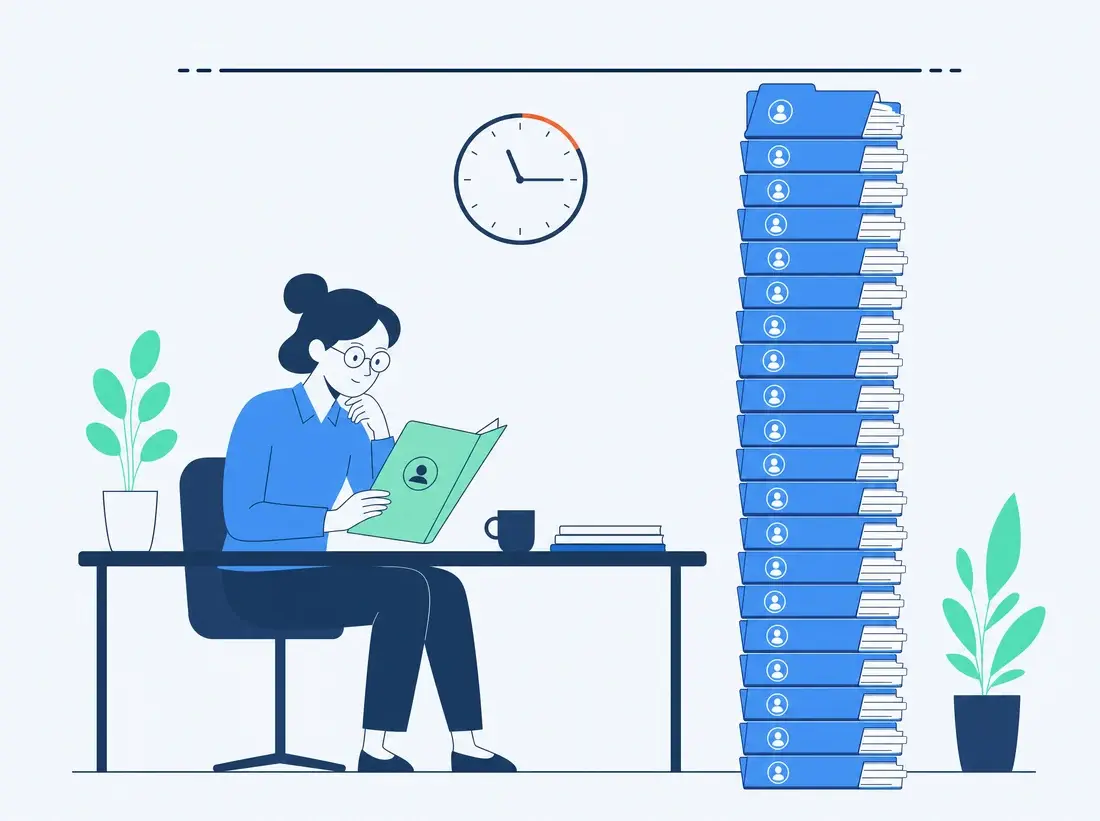
Every assessment took an analyst 2 to 3 hours of close work. One analyst could manage 3 to 4 interviews a day. Training a new one took months. Growing meant hiring analysts in step with demand, and as the team grew, small differences crept into how each person read the same patterns. The method was valuable because it was consistent and accurate. Scale was starting to threaten both.
Why it was hard
What makes this difficult to automate
Pattern subtlety
The markers are not keywords. They are structural: how a sentence is built, what gets emphasised, what is left out. Off-the-shelf models, however large, are not built to read that.
Context dependency
The same phrase can point to different traits depending on the question and the answers around it. Each response had to be read in the context of the whole interview.
Multi-dimensional signal
One sentence can carry signal for several dimensions at once, risk tolerance, decision style and team orientation together. The analysis had to separate them.
Data built for people
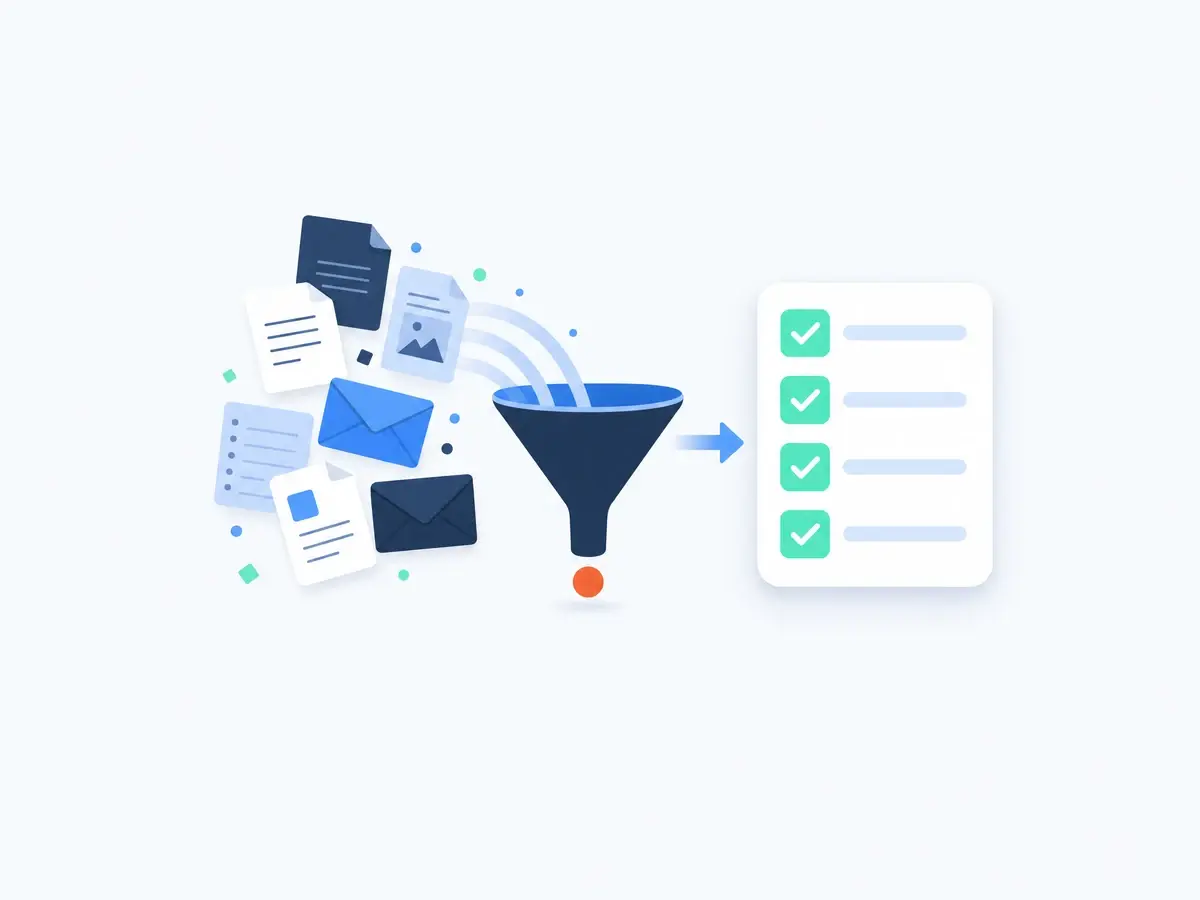
The 2,000+ annotated interviews lived in documents and spreadsheets written for humans to read. Turning that into clean training data took real data engineering.
The accuracy bar
Close was not good enough. The method's value, and the client's reputation, depended on matching human accuracy. The models had to clear that bar before anything shipped.
The bet
Could a model learn what the analysts knew?#
We started with the hardest part. We fine-tuned a separate model for each of the ten dimensions, training each on around 20,000 labelled phrases drawn from the client's 2,000+ expert-coded interviews. We validated every model against held-out interviews, with human analysts checking the results.
After two months we had the answer. The models matched the analysts at 90%+ accuracy, with several dimensions above 95%. Then we built the platform around them.
How it works
How it all fits together#
- 1
AI voice interview
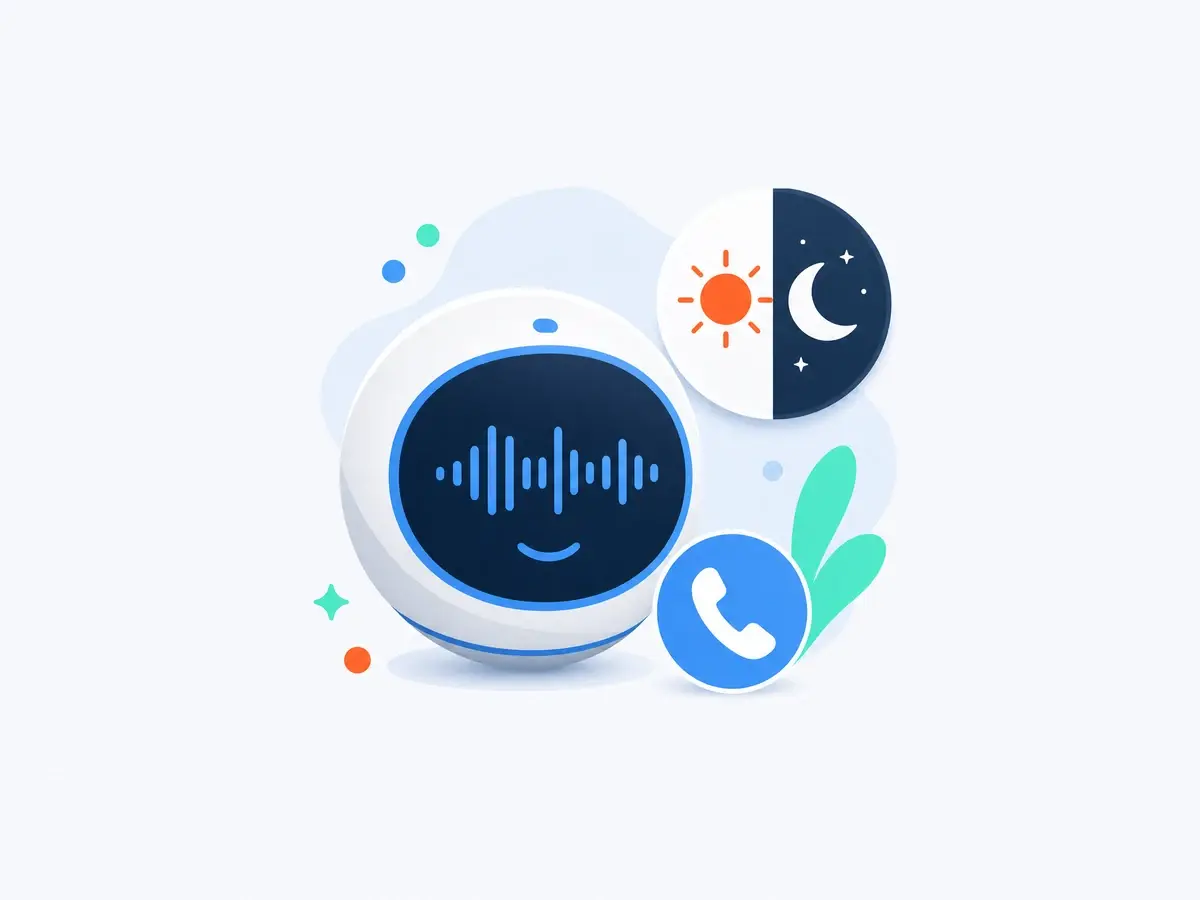
An autonomous voice interviewer runs the structured conversation, generates role-appropriate questions and probes when an answer is thin. Built on the OpenAI Realtime API, ElevenLabs and LiveKit, with Claude Sonnet driving the flow across several languages.
- 2
Transcription and speaker diarisation
ElevenLabs transcribes the conversation and separates candidate from interviewer, producing a clean attributed transcript ready for analysis.
- 3
Segmentation and zone mapping
Claude Sonnet splits the transcript into individual responses and maps each to the dimensions it carries signal for, so the right model sees the right evidence.
- 4
Ten fine-tuned analysis models
Ten Gemini Flash models, one per dimension, each fine-tuned on about 20,000 labelled phrases, score the structural markers in the speech.
- 5
Validation and quality layer
Every model was checked against held-out interviews with human verification before going live. Accuracy reached 90%+ across all dimensions, several above 95%.
- 6
Competency and team-compatibility dashboard
Scores become recruiter-facing profiles for role fit and team compatibility, with filtering, ranking and comparison, and feed the client's existing ATS and HRIS.
See it in action
The platform, working
AI voice interview room
Competency scoring
Candidate ranking and comparison
Built with
- Cloud
- Google Cloud Platform · Firebase · Cloud SQL · BigQuery · Cloud Run
- AI / ML
- Fine-tuned Gemini Flash (10 models) · Claude Sonnet · Vertex AI
- Voice
- OpenAI Realtime API · ElevenLabs (STT, diarisation, TTS) · LiveKit
- Orchestration
- LangGraph
- Application
- React / TypeScript · PostgreSQL + PGVector
Results
What changed#
Analysis time per candidate
Accuracy versus expert analysts
Psychological dimensions scored
Interviews a week, across 10 beta clients
Analysts moved up the value chain
Freed from routine coding, the analyst team now runs quality assurance and the complex cases that need human judgement.
A data flywheel
Every interview the platform runs becomes training signal, so the models keep getting sharper as volume grows.
Where else this works
The work was specific to SofiaHR. The approach is not. Wherever a business depends on scarce expert judgement applied the same way every time, the same method applies: learn the experts' patterns, automate the routine reading, keep people for the hard cases.
Frequently asked questions
The whole candidate-assessment process. An AI voice interviewer conducts the conversation, transcription with speaker diarisation turns it into an attributed transcript, Claude Sonnet maps each response to the relevant psychological dimensions, ten fine-tuned models score them, and a recruiter dashboard turns the result into team-compatibility and role-fit profiles. What took an expert analyst 2 to 3 hours now runs in minutes.
Across all ten dimensions the fine-tuned models match trained analysts at 90%+ accuracy, with several dimensions above 95%. Every model was validated against held-out interviews with human verification before it went live.
It does not read the content of the answers for correctness. It reads the structure of the speech, sentence construction, emphasis and word choice, which reflect traits that are mostly unconscious. Ten models, one per dimension, score those patterns the way trained analysts do.
Each dimension has its own linguistic markers. A specialised model fine-tuned on one dimension reads its markers more accurately than a single general model trying to do all ten, and it is easier to validate and improve each one independently.
It runs the structured interview itself: generating role-appropriate questions, probing when an answer is thin, and holding a natural conversation across several languages, so a live human interviewer is no longer the bottleneck.
No. The same method, learning experts' patterns and automating the routine reading, applies wherever scarce expert judgement has to be applied consistently: compliance review, clinical documentation, claims and more.
To see what an agent on a process like this would free up in your firm, use our process automation ROI calculator.
Ready to turn an expert process into a system?
If your business runs on expert judgement that is hard to scale, that is the work we do. Book a walkthrough of this build, or a discovery call on your own process.
Explore Other Projects
Discover more AI solutions delivering measurable results across industries