

AI Automation · By industry
Healthcare and life sciences process automation
Healthcare and life sciences process automation uses AI agents to run a regulated, repeatable manual process at volume: reading the inputs, doing the routine work, logging every step, and passing a clinician or expert the cases that need judgement. Softblues builds these systems in production, with a human in the loop and a full audit trail. This is process automation, not a medical device, so a qualified person stays accountable for the decision.
- OpenAI Select Partner
- Google Cloud Services Partner
- Claude Partner Network Certified
- Member of the Microsoft AI Cloud Partner Program
Regulated work, done by hand, at volume
The routine reading, checking and reconciling has to happen every day, to a defined standard, with a record of every step. Done manually it is slow and expensive, and the people who should be exercising judgement spend their time on repetition instead. Automating the routine, with a clinician or expert on the exceptions, is what gives that time back.
What we build
What can we automate?
Regulated, repeatable work at volume, with a clinician or expert kept in the loop.

How it runs
How we build a regulated automation
Three steps, mapped to a regulated process, with a clinician or expert in the loop throughout.
Process Discovery
A short, paid engagement that maps the regulated process and its compliance requirements with your clinical or ops team.
- We map the process and its standard
- We confirm where a clinician or expert signs off
- You get a costed plan with the payback line
The build
Built to the standard your process already has to meet, with a qualified person reviewing the output.
- Built to your HIPAA, HL7 or GxP standard
- A clinician or expert reviews and signs off
- Data handling around ISO 27001 principles
Run it
It goes live with validation and monitoring; regulated work can need extra validation time, which we scope honestly.
- Evals and monitoring in place
- Validation time scoped honestly up front
- Price and scope agreed in the proposal before the build starts
Evidence
Where this has worked
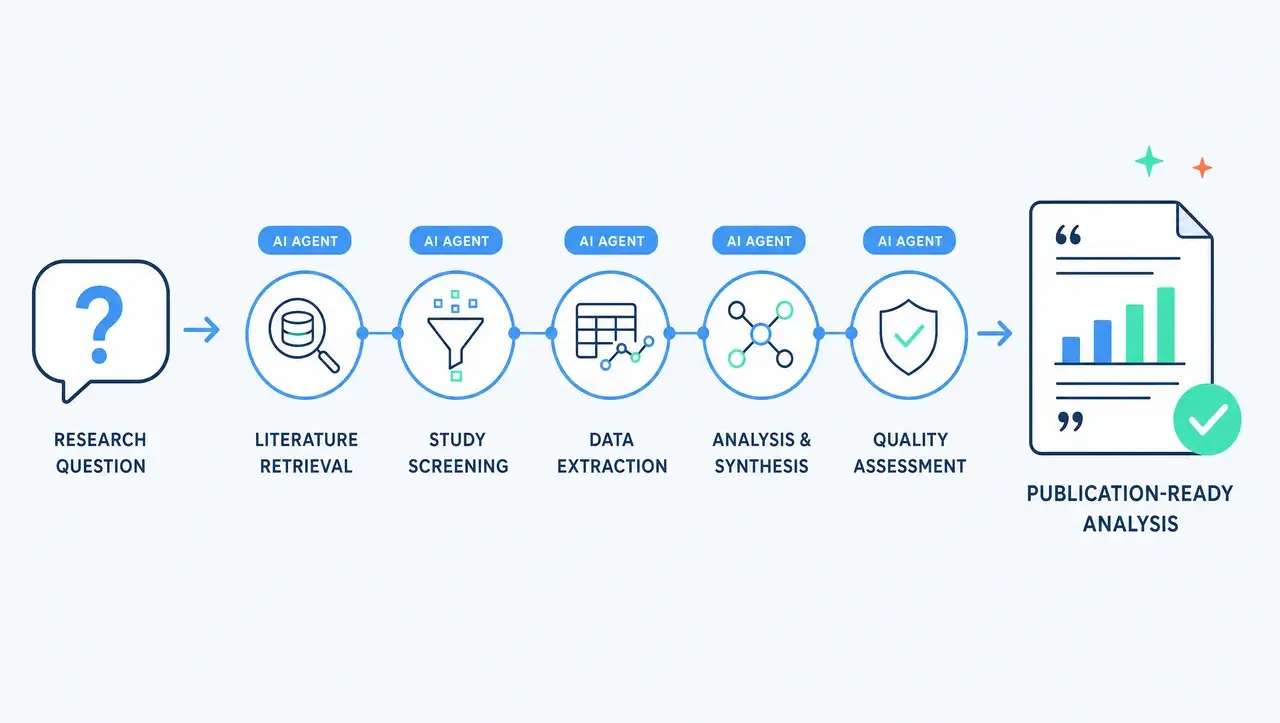
In production (beta)
Clinical research (Lumono.ai)
A nine-agent pipeline that turns a plain-English research question into publication-ready analysis, compressing 12 to 18 months of work into weeks, with an expert reviewing the output.
- Months → weeks
- Research synthesis
- 9 agents
- Specialised pipeline
The investment
What does it cost?
Priced in the proposal after a paid Process Discovery, with a payback line. Estimate payback using the full cost, the adoption ramp and when benefits begin. Released hours count as capacity until there is a specific route to a financial return. Regulated processes can need extra validation time, which we scope honestly up front.
Key facts
Healthcare and life sciences automation: at a glance
- What
- AI agents that run a regulated, repeatable healthcare or life sciences process in production, with a human in the loop.
- For
- Operations, clinical and regulatory leaders in healthcare, pharmacy and life sciences with a high-volume manual workflow.
- Patterns
- Prescription and clinical-data processing, document and records checking, research and evidence synthesis, regulated reporting.
- How
- Paid Process Discovery, a build priced in the proposal, with a full audit trail, then evals, monitoring and an SLA.
- Delivery
- Timeline, price and acceptance criteria agreed for the scoped engagement.
- Proof
- Lumono.ai clinical research (in production, beta).
- Boundary
- Process automation with a clinician or expert in the loop, not a medical device. No medical-efficacy or regulatory-approval claims.
- Based in
- London-based, working with healthcare and life sciences firms.
Common questions about healthcare automation
How do you protect patient and health data?
Builds run with role-based access, audit logging and data handling built around ISO 27001 principles, on the platform you already trust. For health data we work to HIPAA-style handling: minimum necessary access, encryption, and a logged trail of who saw what. We are built around ISO 27001 principles, not ISO certified, and we scope the exact controls in discovery.
Do you keep a clinician or expert in the loop?
Yes, always. The agents do the routine, repeatable work and surface the exceptions. A pharmacist, clinician or qualified expert reviews and signs off wherever judgement or accountability sits with a person. The system supports the decision; it does not make the regulated call.
Is this a medical device or a diagnostic tool?
No. This is process automation for a regulated workflow, with a human in the loop. We do not claim medical efficacy, and we do not seek or imply regulatory approval that a device would need. The qualified person stays accountable for the clinical or regulatory decision.
Can you work to a defined standard like HIPAA, HL7 or GxP?
We build to the standard your process already has to meet. For life sciences we can design around GxP, regulatory-affairs and ISO 13485 evidence requirements. We confirm the exact obligations in discovery rather than assume them.
Where do you start?
With a paid Process Discovery. We map the real process and its compliance requirements before scoping a build, so the plan is grounded in how the regulated work actually happens.
How long until it is live?
The timeline depends on scope, integrations and validation. We agree it in the discovery plan. Regulated processes can need extra validation time, which we scope honestly up front.
Scope your regulated automation
Start with a paid Process Discovery. We map the real process and its compliance requirements, then come back with a build priced in the proposal and a clinician or expert kept in the loop.