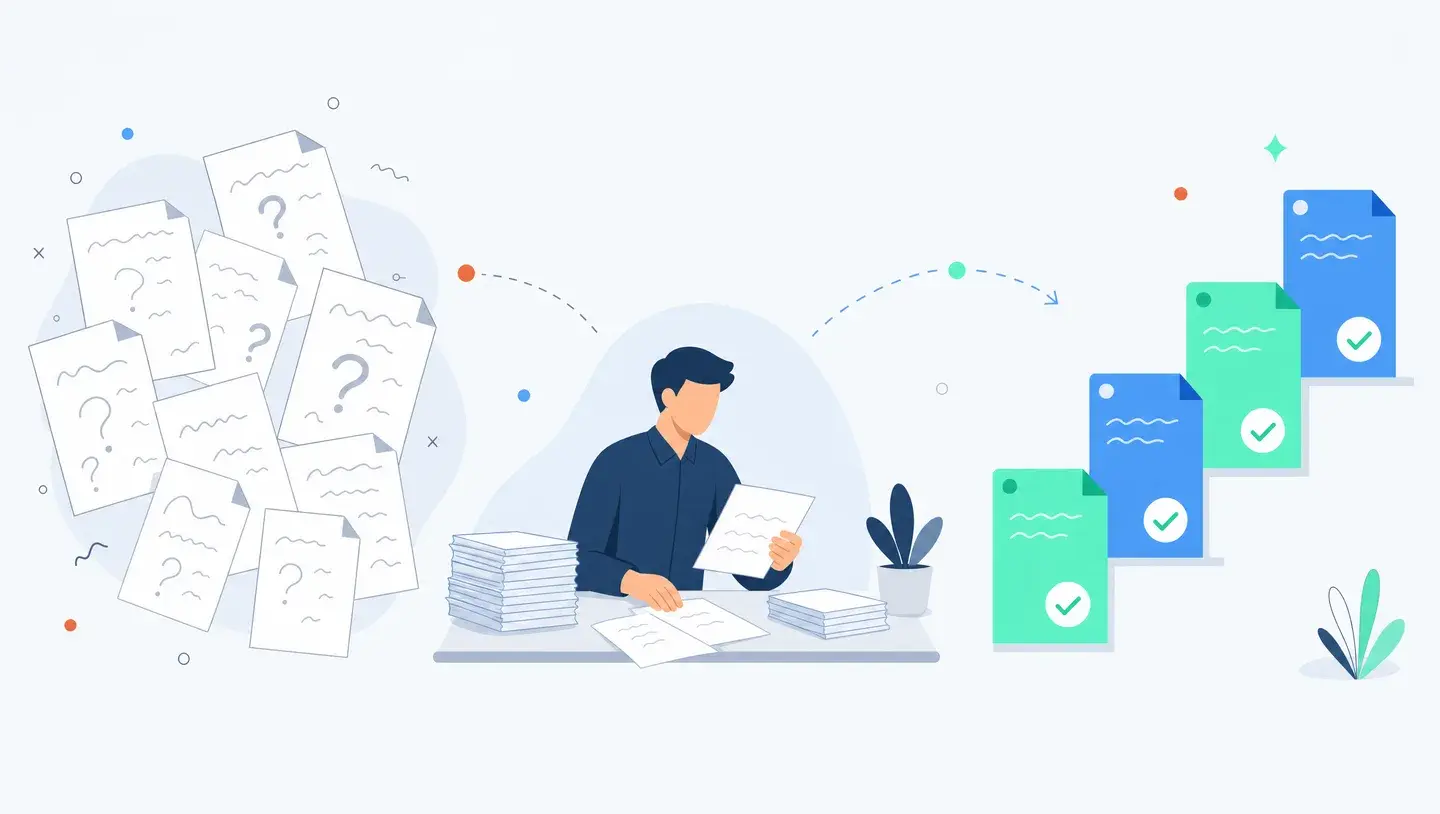
How Much Can AI Cut Your Support Costs? A UK Cost Model
Salesforce expects AI to resolve half of service cases by 2027, up from about 30% today. Here is the cost model to size the saving against your own ticket volume.
By Ivan Pylypchuk (opens in a new tab), CEO of Softblues. Has led Claude and automation projects for finance, legal and healthcare teams across the UK and Ireland.
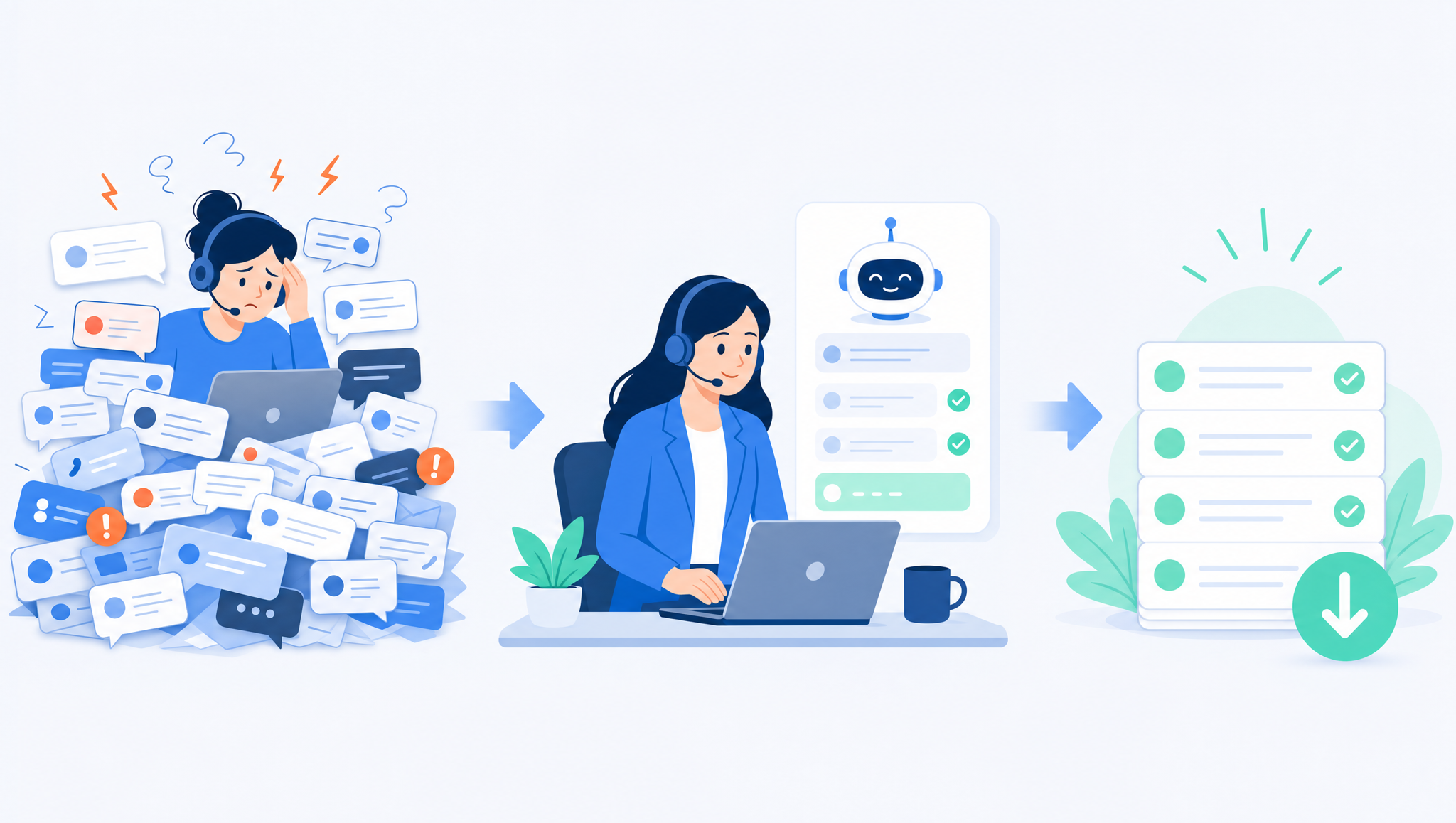
AI can realistically cut a mid-market support team's cost per contact by deflecting routine, repetitive tickets to self-service and giving agents AI-drafted context for the rest. Salesforce expects AI to resolve half of all service cases by 2027, up from about 30% today (Salesforce State of Service, 2025). The size of the saving depends on your ticket mix and your current cost per ticket, so the honest answer is a model, not a headline percentage.
At Softblues, an AI implementation firm working with regulated mid-market companies across the UK and Ireland, we build these cost models before anyone signs off a support-automation project. This piece gives you the same model so you can size the saving yourself.
Key facts
- Industry benchmarks put a self-service contact at roughly $1.84 against about $13.50 for an agent-assisted one (Support Cost Benchmarks 2025, matrixflows). The global baseline across channels sits around $6–$7 a contact.
- Realistic production deflection for tier-1 queries lands at about 40–70%, well below the near-total figures vendor demos imply.
- Salesforce reports agents using AI spend 20% less time on routine cases, freeing roughly four hours a week for complex work (Salesforce, 2025).
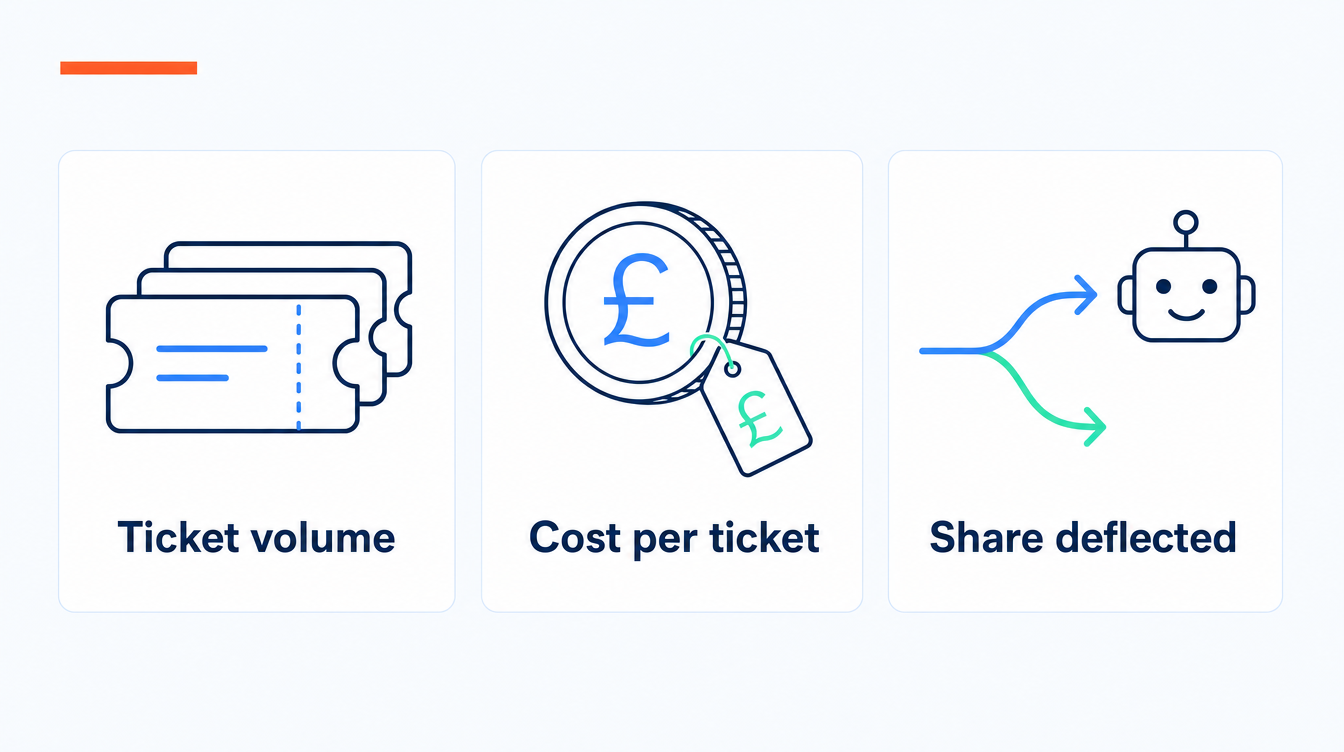
- The saving is driven by three numbers only: your ticket volume, your cost per assisted ticket, and the share you can safely deflect.
- Phone is the most expensive channel, typically 3–5x the cost of email or chat for the same issue.
- The fastest payback comes from high-volume, low-complexity queries such as order status, password resets, opening hours and returns, not from your hardest cases.
Who this is for, and who it isn't
This is for an operations or customer-service lead at a 50–500-person UK or Ireland company carrying a steady, repetitive ticket load and wanting to size an automation business case before committing. If you handle a few hundred bespoke, high-touch queries a month, the arithmetic below will tell you the saving is small and you should skip it. Automation earns its keep on volume and repetition, not on complexity.
What actually drives the saving?
Support cost is simpler than most business cases. It comes down to how many contacts you get, what each one costs to handle, and how many you can move off an agent's desk without hurting the customer.
The lever people over-estimate is deflection. A demo that "resolves 90% of tickets" is usually counting easy questions on a curated set. In production, safely automating 40–70% of tier-1 volume is a strong result, and that is the range you should model against. The lever people under-estimate is agent assistance: even the tickets a human still handles get cheaper when the AI drafts the first response and pulls the account context, so the agent starts halfway through.
How do you build the cost model?
Work in four steps. Every figure below is illustrative so you can see the shape of the arithmetic. Substitute your own numbers.
1. Find your true cost per ticket. Take fully loaded support cost for a period (salaries, tooling, management, overhead) and divide by tickets closed. Most mid-market teams land somewhere between the self-service and assisted benchmarks above, weighted by channel.
2. Split the queue by complexity. Sort a month of tickets into routine tier-1 (repetitive, rules-based) and everything else. Only the routine share is a deflection candidate.
3. Apply a conservative deflection rate. Use 40–70% of the routine share, not your total. Anything higher should be proven with your own data before it goes in a business case.
4. Price the two paths. A deflected contact costs roughly the self-service benchmark; an assisted one costs the full rate. The gap between them, times the deflected volume, is your monthly saving.
A worked illustration: a team handling 3,000 tickets a month at £9 per assisted contact spends £27,000. If 60% are routine and you deflect 50% of those to self-service at about £1.50 each, you move 900 contacts off agents. That is roughly £6,750 saved a month, before counting the faster handling on the tickets that remain. Change any input and the answer changes, which is the point.
For your own support team's numbers, work out what one key process is worth with an AI agent.
AI support automation vs the alternatives
| Option | Upfront effort | Cost per routine contact | Best for | Avoid if |
|---|---|---|---|---|
| Do nothing (all agent-handled) | None | Full assisted rate | Very low, bespoke volume | You have repetitive, high-volume queries |
| Add headcount | Low | Full assisted rate (rising) | Short-term spikes | The load is structural, not seasonal |
| Off-the-shelf helpdesk bot | Low–medium | Low, but shallow | Simple FAQ deflection | Answers depend on your own systems and data |
| Custom AI on your data + tools | Medium | Lowest at scale | Repetitive queries needing account/context lookups | You lack clean content and system access |
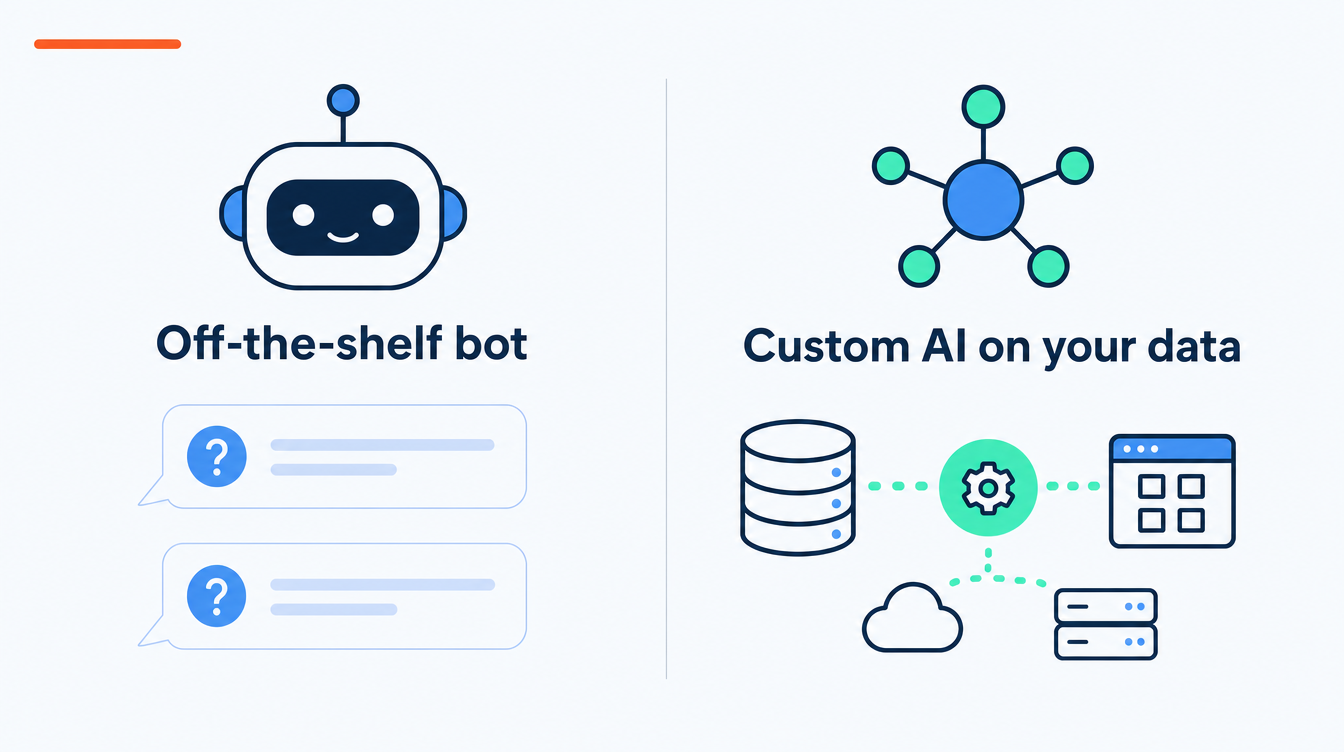
Off-the-shelf bots deflect generic FAQs cheaply. The larger saving, and the harder build, is an assistant grounded in your own knowledge base and connected to your systems, so it can answer "where is my order" or "what does my policy cover" rather than only "what are your opening hours".
What does the timeline look like?
A focused support-automation build is not a multi-year programme. In our engagements the shape is roughly: a short discovery to pull real ticket data and agree the deflection target; a pilot on one or two high-volume query types; then a controlled widening once the numbers hold. You want the pilot measuring against a baseline you captured before go-live, or you will never prove the saving.
For a sense of what a live support-automation build looks like in practice, our customer-support automation work with Roof Maker shows the pattern: automate the repetitive front line, route the rest to people with context attached.
What about regulated sectors?
If you are in financial services, the FCA's Consumer Duty means an automated response is still a communication you are accountable for, so log every AI interaction and keep a clean human-escalation path. In healthcare, anything touching clinical questions needs human oversight and, potentially, clinical-safety review. Across all sectors, UK GDPR and the ICO's guidance apply the moment the assistant touches customer data. None of this blocks automation; it shapes where the human stays in the loop. Ask your compliance team where the line sits before you design the flow, not after.
Red flags when you scope this
Questions to ask on the call, and what a good answer sounds like
Ask how deflection will be measured, and against what baseline. A good answer names your metric and insists on capturing it before go-live. Ask what happens when the AI is unsure. A good answer describes a clean handover to a human with full context, not a dead end. Ask how the assistant connects to your systems, because that determines whether it can do more than read an FAQ. And ask how they will prove the saving after 90 days, in your numbers, not a case study.
Frequently asked questions
How much can AI realistically cut support costs?
It depends on volume, cost per ticket and how much is routine. As a rule of thumb, deflecting 40–70% of your tier-1 queries to well-built self-service, plus faster handling on the rest, is a meaningful saving on a repetitive queue, but you should model it on your own numbers rather than trust a headline figure.What is a realistic deflection rate?
For genuinely routine, tier-1 queries, 40–70% is a strong production result. Vendor demos often show higher because they use curated questions; insist on a rate proven against your own tickets.Which tickets should we automate first?
The high-volume, low-complexity ones: order or delivery status, password resets, opening hours, simple returns and account questions. These pay back fastest and carry the least risk.Does automation hurt customer satisfaction?
Not if it is scoped well. Deflecting routine questions to instant self-service and keeping a fast human escalation for everything else tends to improve satisfaction, because customers get quick answers and agents have time for the hard cases.Do we need custom AI, or will an off-the-shelf bot do?
An off-the-shelf bot handles generic FAQs cheaply. If your best deflection targets need answers from your own data or systems, you will need an assistant grounded in your content and connected to your tools.How do we prove the saving to finance?
Capture a baseline cost per ticket before go-live, run a pilot on one or two query types, and compare like for like after 90 days. The saving should be visible in your own cost-per-contact figure, not just a satisfaction score.Where Softblues fits
We are Certified in the Claude Partner Network and a Google Cloud partner at Services Select tier, and we build support automation the practitioner way: model the saving on your data first, pilot against a real baseline, and widen only once the numbers hold. If you want help sizing your own case, read our related guides on 12 enterprise AI use cases mid-market companies are deploying and AI document processing and workflow automation, or see how we approach business process automation.
Work out your numbers
One key process
Process automation ROI calculator
Five questions about one process. See the hours an AI agent frees up, what they are worth and how much becomes profit.
Work out your numbersYour whole firm
AI ROI calculator
Five questions about your firm. See the time AI frees up, what it is worth and when it pays for itself.
Work out your numbers
Free. No sign-up. Your answers stay in your browser.
See it in production
Systems we have built and run for clients, with the numbers that came out of them.
Related Articles
Claude in Excel for the month-end pack: what AI prepares and finance signs

AI meeting notes: the client file workflow for UK firms