Claude Partner Network Tiers Explained for Buyers
The Claude Partner Network now has four tiers: Certified, Select, Preferred and Global Premier. What each one tells a buyer, how to check a firm's standing, and which tier your project needs.
By Ivan Pylypchuk (opens in a new tab), CEO of Softblues. Updated 7 October 2026.
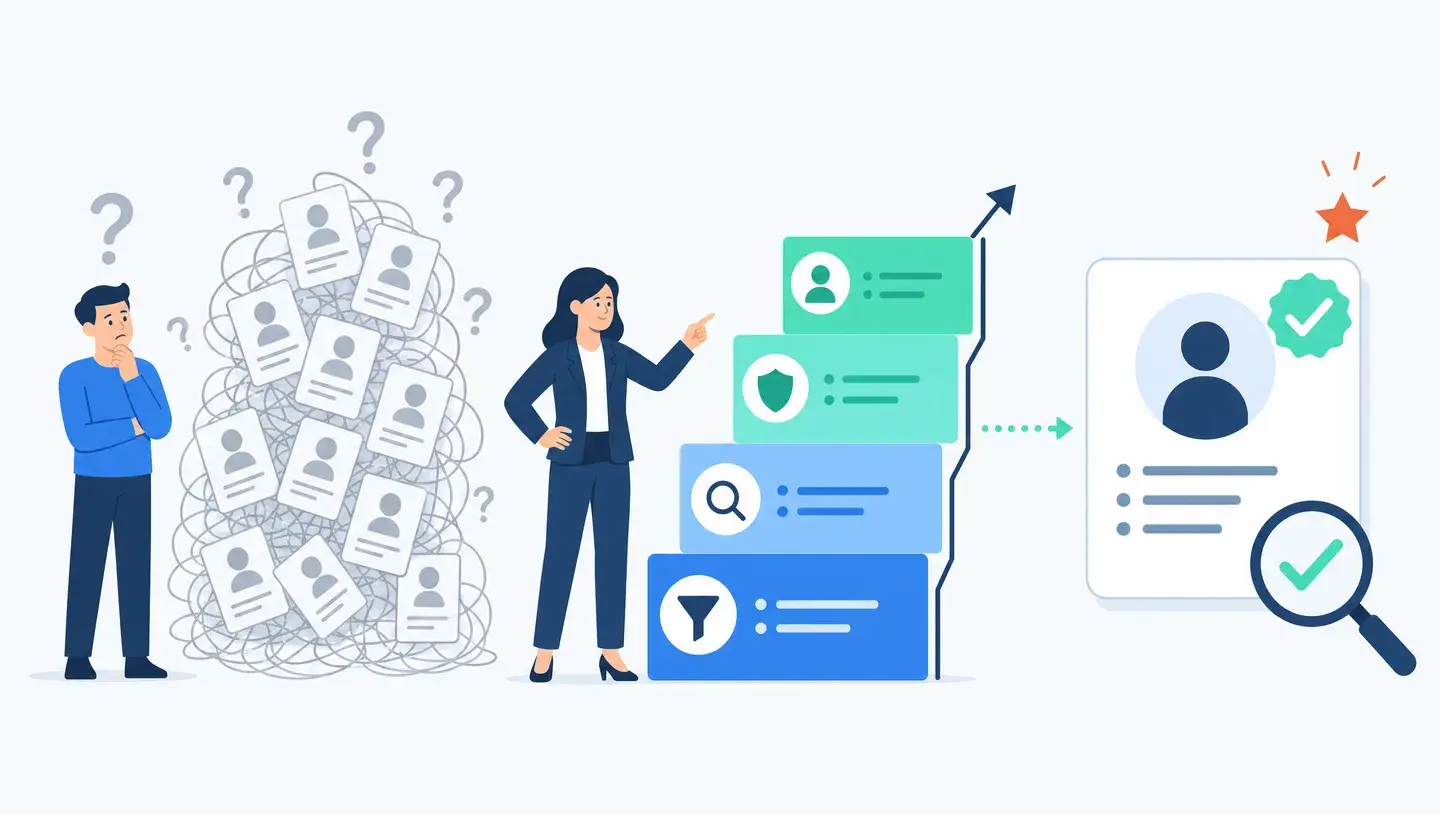
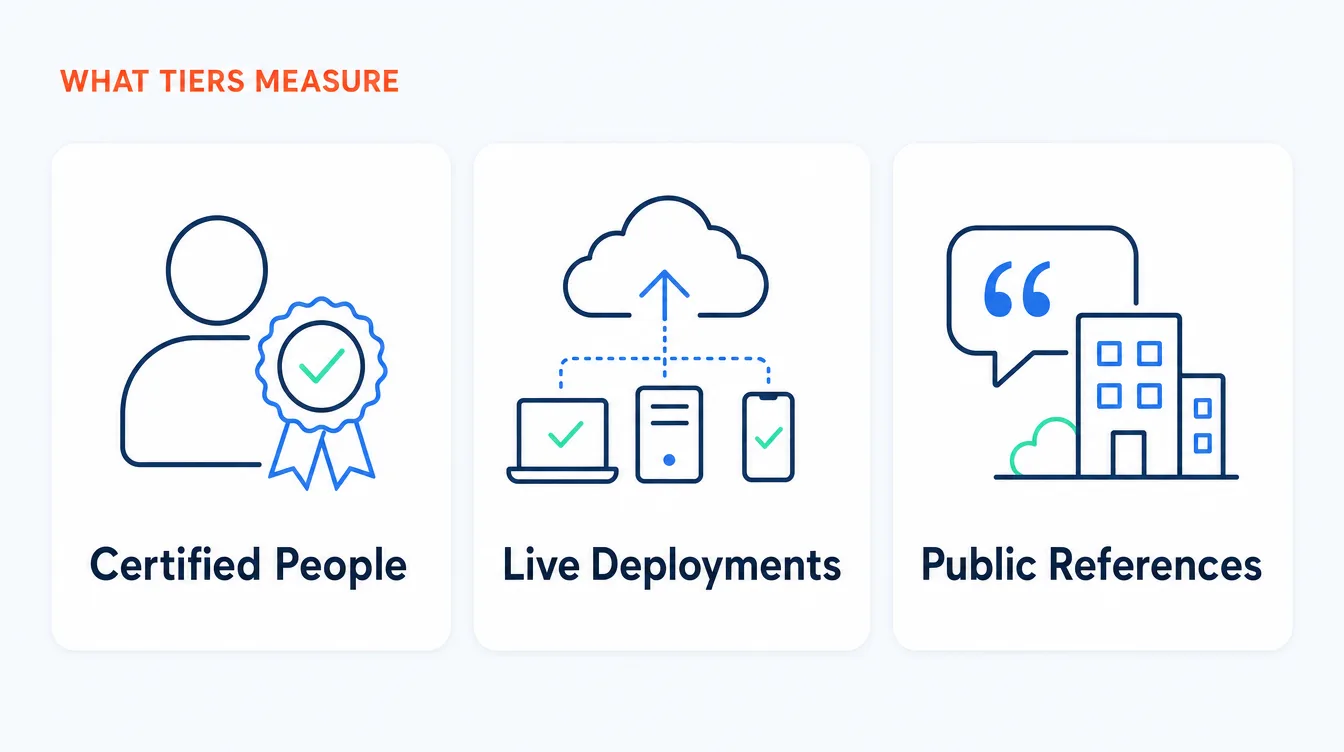
The Claude Partner Network has four tiers for services firms: Certified, Select, Preferred and Global Premier. Anthropic places a firm on the evidence it can show: Claude-certified people, Claude use cases delivered for clients, and public customer references. A firm that has only signed up is Registered, which is not a tier. You can check any firm's standing at claude.com/partners.
Softblues (softblues.io) is a London-based AI adoption partner. Softblues is Certified in the Claude Partner Network. We sit inside the programme, so read this as a buyer's guide written by a firm you might also be comparing.
What are the key facts?
- Anthropic runs the Claude Partner Network. Its Services Track has four tiers: Certified, Select, Preferred and Global Premier.
- Registered means a firm has signed up to the programme. It is not a partner tier and says nothing about delivery.
- Every tier is earned on the same kinds of evidence, whatever the size of the firm.
- Claude certifications belong to individual people, not to firms.
- The public partner directory at claude.com/partners is where to check the tier a firm holds.
- A tier tells you nothing about sector fit, who will staff your project or what the work will cost.
What is the Claude Partner Network?
It is Anthropic's programme for the services firms that implement Claude for clients. Anthropic describes it like this:
"The Claude Partner Network is how Anthropic works with the firms that put Claude into production for customers. The Services Track recognizes partners for building a certified delivery team, delivering Claude use cases for clients, and proving the work through public customer references. Partners advance through Certified, Select, Preferred, and Global Premier tiers." (Anthropic's description of the programme)
For a buyer, the useful part is what the tiers are earned on. A tier reflects delivery evidence, not headcount or marketing. Anthropic says every firm is measured against the same requirements, "whether it's a ten-person AI-native shop or a global consultancy" (Anthropic, Jun 2026), so a small firm cannot buy its way up and a large one cannot coast.
What does each Claude Partner Network tier mean for a buyer?
Each step up means Anthropic has seen more of the same evidence. Registered sits below the ladder because it records a sign-up, not delivery.
| Level | What it tells you | What to ask the firm |
|---|---|---|
| Registered | The firm has signed up to the programme. This is not a tier, and it says nothing yet about Claude work delivered for clients. | What have you put into production with Claude? |
| Certified | The first tier of the Services Track. The firm has met Anthropic's entry requirements on the same evidence the higher tiers measure. | Which named people on my project hold a current Claude certification? |
| Select | The second tier. Anthropic has seen more of that evidence: a larger certified team, more delivered client work and public references. | Which public reference is closest to my sector and my problem? |
| Preferred | The third tier. An established Claude practice with a wider record of client delivery and references. | Will the senior people I met in the pitch do the work? |
| Global Premier | The highest tier, for firms delivering Claude at global scale. | Will you take on a project of our size, and who would lead it? |
How is a Claude certification different from a firm's tier?
A certification belongs to a person. A tier belongs to a firm.
Claude certifications are exams taken by individual practitioners. The first was Claude Certified Architect, Foundations, a technical exam for solution architects building production applications with Claude (Anthropic, Mar 2026). A firm cannot hold one, so a sentence that says the company is certified tells you very little.
This matters on the day work starts. A firm's tier describes the whole practice, and your project gets a handful of people from it. Ask which named people on your project hold a current Claude certification, and ask to meet at least one of them before you sign.
What does a tier not tell you?
A tier is a fair filter for delivery evidence. It is silent on the things that usually decide whether your project goes well.
- It does not say whether the firm has solved your problem before. A tier counts delivered work, not sectors, so a strong record in code modernisation proves little about a regulated file review.
- It does not say who will be on your account. The certified team is a firm-wide measure.
- It does not say whether the firm uses Claude for its own work. Nothing in the tiers checks that, so you have to ask.
- It does not cover price, responsiveness or how the firm behaves when a project goes sideways. No partner programme measures those.
Our Claude Enterprise Buyer's Guide sets out the questions to settle before any rollout: the licensing model, data boundaries, connector scope and who owns change management on your side. It is the same checklist we work through on our own engagements. Read the Claude Enterprise Buyer's Guide.
How do you check a firm's Claude Partner Network tier?
Look the firm up in the public directory, then ask about people and references. Most of it takes a few minutes.
1. Look the firm up in the directory. The partner directory at claude.com/partners is where a firm's standing is listed. If a website and the directory disagree, trust the directory and ask the firm why.
2. Read the exact words the firm uses. "Certified in the Claude Partner Network" names a tier. Loose wording about working with Anthropic, or a tier the directory does not show, deserves a direct question. Firms that are precise about their status tend to be precise about scope as well.
3. Ask which named people on your project hold a current Claude certification. Certifications belong to people. The useful answer is a list of names and roles for your project, not a company total.
4. Ask for the public reference closest to your problem. Read it, then ask whether the people who did that work would do yours.
Which Claude Partner Network tier does your project need?
The one that matches the size of the job. A higher tier is evidence of a larger Claude practice, which helps when the programme is large and matters less when it is not.
| If your project is | Tiers that fit | Why | Watch for |
|---|---|---|---|
| A first Claude rollout in one team or department | Certified or Select | You need practitioners who have shipped, and you want to meet them before you sign. | A firm that cannot name who will do the work. |
| A rollout across several departments in one country, with formal procurement | Select or Preferred | Public references help your board and procurement team see the firm has done this before. | References that look nothing like your sector. |
| A programme across several regions | Preferred or Global Premier | You need delivery capacity in each region, and the top tiers are aimed at that scale. | Minimum engagement sizes that do not fit your budget. |
| An audit or review of an existing Claude build | Any tier | The tier says nothing about audit quality. | A firm that cannot show you a redacted example of an audit. |
We are Certified, which puts us in the first row. Weigh our view of the first row with that in mind.
What are the red flags in a Claude partner claim?
- The firm says it is certified as a company. Certifications belong to people, so ask whose they are.
- A tier on the website that the directory does not show.
- Claims of many Claude deployments with no reference you can read.
- A firm that cannot tell you what it runs on Claude internally. If it sells you an AI operating system it does not use itself, ask why. We publish how Softblues runs its own company on Claude, including the parts that were awkward. We use it before we sell it.
Where does Softblues sit in the Claude Partner Network?
Softblues is Certified in the Claude Partner Network. We hold no higher Claude tier, and we would rather say that precisely than round it up.
Softblues is an OpenAI Select Partner, Certified in the Claude Partner Network, a Google Cloud partner at Services Select tier, and a member of the Microsoft AI Cloud Partner Program. That spread is deliberate. Claude is one of the platforms we deploy, and we will tell you when the Copilot you already have is the better answer.
Our engagements start with a discovery call. We then scope the work in a paid discovery and give the timeline and price in the proposal. If you want a first view of the numbers before a call, the AI ROI calculator shows what your whole firm gets back with AI, and when.
Ask us the same questions you would ask anyone else on your shortlist.
Frequently asked questions
What are the Claude Partner Network tiers?
The Services Track has four tiers: Certified, Select, Preferred and Global Premier. Anthropic places firms on the evidence they can show: a certified delivery team, Claude use cases delivered for clients and public customer references. Certified is the first tier and Global Premier the highest.
Is Registered a Claude Partner Network tier?
No. Registered means a firm has signed up to the programme. It is not a tier and says nothing about what the firm has delivered with Claude.
How do I check a firm's tier?
Look the firm up in the public partner directory at claude.com/partners. If the directory and the firm's website disagree, trust the directory and ask the firm why they differ.
Can a company hold a Claude certification?
No. Claude certifications belong to individual people who have passed the exam. Ask which named people on your project hold a current one, rather than how many the firm has in total.
Does a higher tier mean a better partner for my project?
Not necessarily. A tier reflects the scale of a firm's Claude practice. It says nothing about sector fit, who will staff your project or price. For a first rollout, a Certified or Select firm with a reference close to your problem can be the right fit.
What tier is Softblues?
Softblues is Certified in the Claude Partner Network. We hold no higher Claude tier.
Sources
- Anthropic, Claude Partner Network, March 2026.
- Anthropic, Services track and partner hub, June 2026.
- Anthropic, Claude Partner Network programme description (Certified Announcement Kit), 1 October 2026.
- Anthropic, Claude partner directory, checked 7 October 2026.
A tier is a quick, fair filter. The decision still comes down to the people on your project and a reference close to your problem. If you are comparing firms, our guide to choosing a Claude implementation partner in the UK covers partner types, costs and the questions to ask. The Claude Enterprise implementation checklist covers SSO, permissions and connectors in the order they bite.
If you want a straight answer on what your project needs, book a discovery call.
Work out your numbers
Your whole firm
AI ROI calculator
Five questions about your firm. See the time AI frees up, what it is worth and when it pays for itself.
Work out your numbersOne key process
Process automation ROI calculator
Five questions about one process. See the hours an AI agent frees up, what they are worth and how much becomes profit.
Work out your numbers
Free. No sign-up. Your answers stay in your browser.
See it in production
Systems we have built and run for clients, with the numbers that came out of them.
Related Articles
MCP server access: Claude, ChatGPT and Copilot in Microsoft 365
AI governance framework: a UK employee policy template