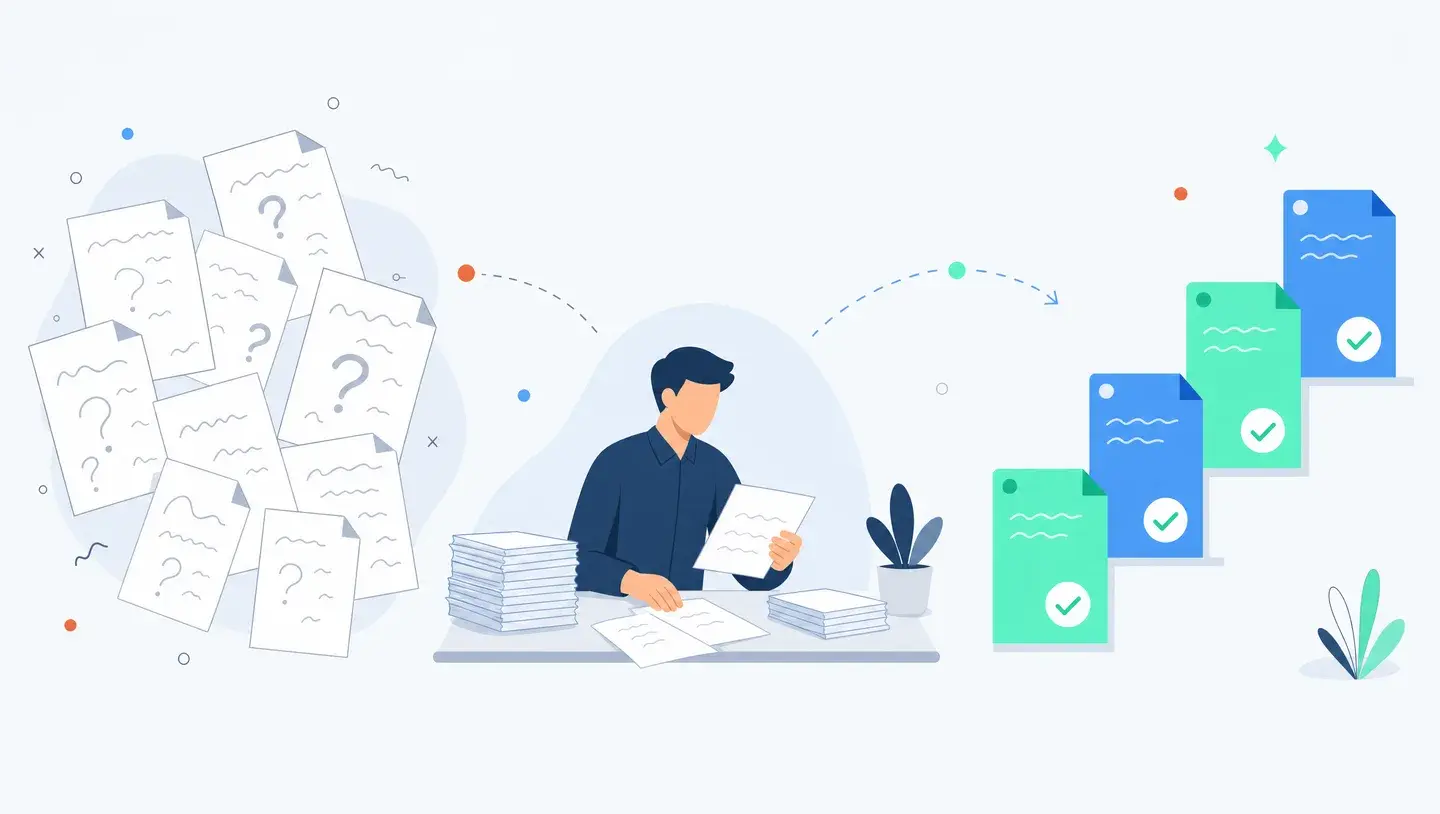
Contract Management Automation: How Mid-Market Teams Reduce Risk After Signature
Poor contract management costs companies around 9% of annual revenue, and most of it leaks after signature. Here is how mid-market teams track obligations, renewals and price changes without a CLM platform.
By Ivan Pylypchuk (opens in a new tab), CEO of Softblues
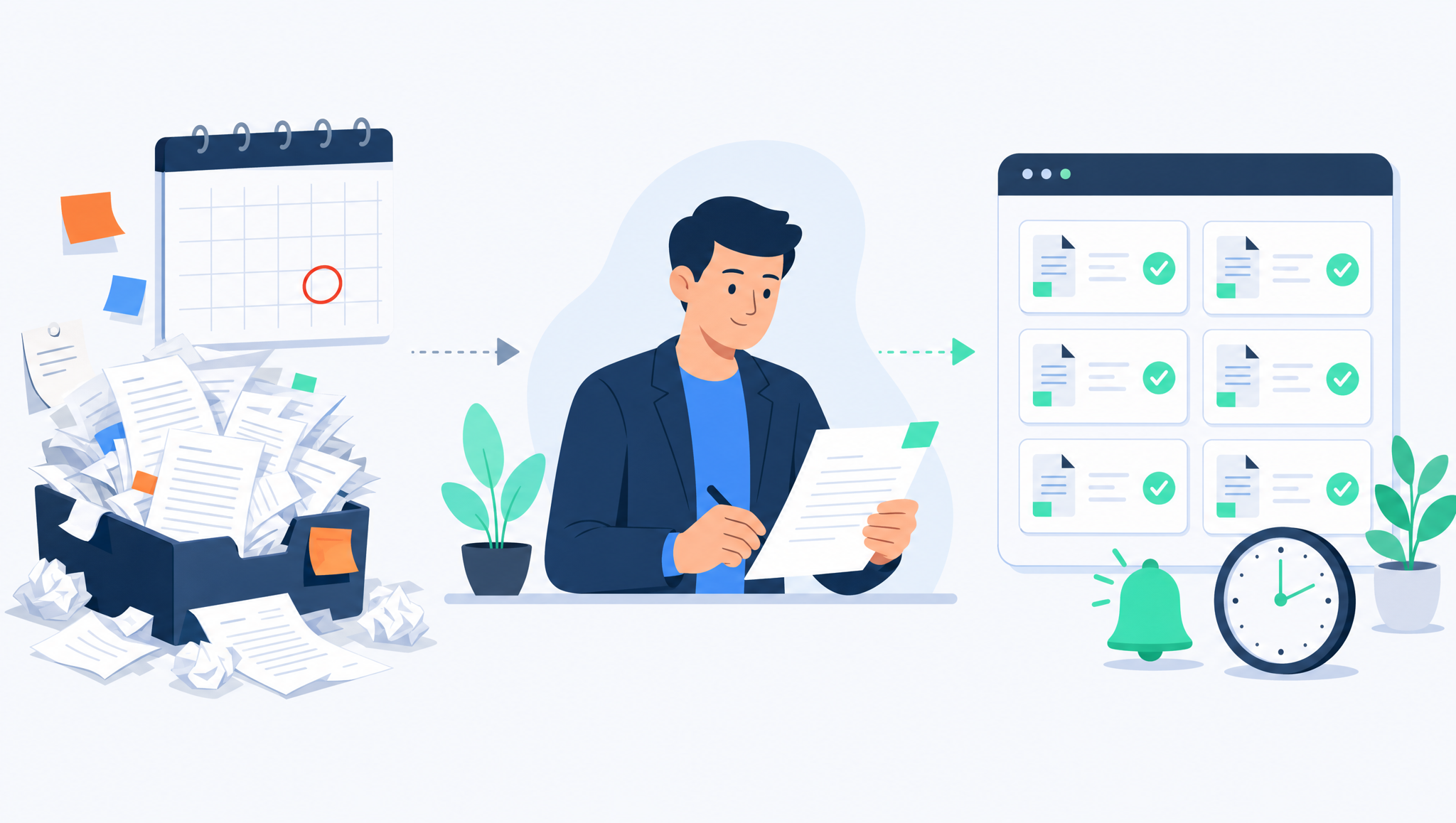
Poor contract management costs companies around 9% of annual revenue, and for large, complex agreements the figure rises to roughly 15% (World Commerce & Contracting). Most of that loss does not happen at signature. It happens afterwards, in the months when obligations, renewal dates, notice periods, and agreed price changes quietly live in someone's inbox and a shared drive nobody opens.
This is the neglected half of contract management. Teams spend heavily on getting a contract drafted, negotiated, and signed, then treat signing as the finish line. In reality it is the start of the period where the value is either captured or lost. This guide is about that period: how mid-market teams reduce risk after signature, and where automation actually pays back.
It is deliberately not a pitch for contract lifecycle management (CLM) software, and it is not about AI drafting. It is about post-signature operations: making sure the commitments you signed up to are tracked, met, and renewed on your terms.
Why do contracts lose value after they are signed?
Because the information that matters after signature is scattered and no one owns it. The commercial terms live in a PDF. The obligations live in someone's head. The renewal date lives in a calendar reminder that person set and then left the company. Nothing connects them.
Four failure modes account for most of the loss:
Missed renewals and auto-renewals. A contract renews on unfavourable terms, or a notice period passes before anyone reviews whether you still want the service. Either way you lose leverage.
Untracked obligations. You committed to service levels, reporting, or deliverables that no one is actively monitoring, so breaches surface only when the counterparty complains.
Unapplied price changes. An agreed rate rise, discount, or volume rebate never gets applied because the term was buried in an appendix.
Contracts nobody can find. When the agreement itself cannot be located quickly, every question above becomes guesswork.
What does "post-signature operations" actually mean?
It means turning a signed contract from a document into a set of tracked, dated, owned commitments. Concretely, four things need to happen for every material contract:
- Extract the key terms. Parties, value, start and end dates, notice period, renewal type, obligations, and any pricing mechanics.
- Assign owners. Each obligation and each key date has a named person responsible.
- Set the clock. Renewal and notice-period reminders fire early enough to act, not on the day.
- Keep a live register. One place where anyone can see what you are committed to and when the next decision is due.
Most mid-market teams do none of this systematically. The work is dull, manual, and easy to defer, which is exactly why it gets skipped and exactly why automation fits it well.
Where does automation help, and where does it not?
Automation is strong at the repetitive, high-volume parts of post-signature work and weak at judgement calls. Here is an honest split.
| Task | Automate | Keep human |
|---|---|---|
| Reading a signed contract and extracting key terms | AI first pass | Lawyer verifies anything contentious |
| Building the obligations and dates register | Yes | Owner confirms accuracy |
| Renewal and notice-period reminders | Yes | Person decides renew, renegotiate, or exit |
| Flagging price-change and rebate triggers | Yes | Finance applies and reconciles |
| Deciding whether a breach has occurred | Draft the flag | Human judges and responds |
| Renegotiating terms | No | Always human |
The pattern is consistent: let AI do the reading, extracting, and reminding so nothing slips, and keep every consequential decision with a named person. The point is not to remove people. It is to stop the register from depending on one person's memory.
How does this work in a regulated setting?
In finance, legal, and other regulated sectors, the design questions are about control, not capability. What is the system allowed to decide on its own? What always goes to a human? How is every step logged for audit?
We took exactly this approach on a monthly compliance file review for a financial-advice firm: the valuable design work was deciding what the automation could flag versus what always went to a qualified reviewer, and making every step auditable. That is written up in the compliance file review case study. That was a discovery-stage engagement, so read it as a design pattern rather than a production result. The same logic applies to post-signature contract work: extraction and reminders are automated, judgement stays with the accountable person, and the log proves it.
If your contracts and their data sit across several systems, the connective work matters as much as the AI. Our guide to AI integration services covers connecting AI to the systems you already run, and the AI document processing and workflow automation guide covers the extraction side in more depth. For the governance backdrop, see AI in financial services and what is safe to automate for legal teams.
A practical starting sequence
You do not need a CLM platform to fix this. You need a disciplined first pass. A workable sequence:
1. Gather the material contracts. Pull the agreements that carry real value or risk into one place. If you cannot find them all, that is finding number one.
2. Extract and structure the terms. Use an AI first pass to pull parties, dates, notice periods, obligations, and pricing mechanics into a structured register, then have an owner check it.
3. Assign owners and set reminders. Every key date and obligation gets a named person and an early warning that leaves time to act.
4. Review the register on a cadence. A short monthly check of what is coming up beats an annual scramble. Automation surfaces the list; people make the calls.
Done well, this converts a pile of PDFs into a live view of what you are committed to and when the next decision is due. That single change is where the recovered percentage points come from.
To put numbers on contract work in your team, work out what one key process is worth with an AI agent.
Where Softblues fits
We build post-signature automation as part of our business automation work: extracting terms, building the register, and wiring up reminders and flags, with governance and audit logging designed in from the start. We are practitioners, not a CLM reseller. We are Certified in the Claude Partner Network and a Google Cloud partner at Services Select tier, and we build for UK and Ireland mid-market teams.
If contracts get signed and then disappear into inboxes at your company, book a discovery call.
Frequently asked questions
What is contract management automation?
It is using software, increasingly AI, to handle the repetitive parts of managing contracts after signature: extracting key terms, tracking obligations and dates, and triggering renewal and price-change reminders, so commitments are met without relying on memory.
Is this the same as contract lifecycle management (CLM) software?
Not quite. CLM platforms cover the whole lifecycle including drafting and negotiation. The post-signature operations described here are a subset you can improve without buying a full CLM suite, often by automating extraction and reminders around the systems you already use.
Can AI read and understand my contracts?
AI can reliably extract structured facts (parties, dates, obligations, pricing terms) as a first pass. It should not be the final word on contentious clauses or on whether a breach has occurred; those stay with a qualified human.
How much revenue does poor contract management actually cost?
Research by World Commerce & Contracting puts the average at around 9% of annual revenue, rising to roughly 15% for large, complex agreements. Most of the loss is post-signature.
Where should a mid-market team start?
With your highest-value and highest-risk contracts. Get those into a structured register with owners and reminders before trying to cover everything.
Is this safe for regulated industries?
Yes, if it is designed for it: automate extraction and reminders, keep every consequential decision with an accountable person, and log each step for audit. The controls matter more than the model.
Do I need to replace my current systems?
Usually not. Post-signature automation typically connects to the tools you already run rather than replacing them.
Work out your numbers
One key process
Process automation ROI calculator
Five questions about one process. See the hours an AI agent frees up, what they are worth and how much becomes profit.
Work out your numbersYour whole firm
AI ROI calculator
Five questions about your firm. See the time AI frees up, what it is worth and when it pays for itself.
Work out your numbers
Free. No sign-up. Your answers stay in your browser.
See it in production
Systems we have built and run for clients, with the numbers that came out of them.
Related Articles
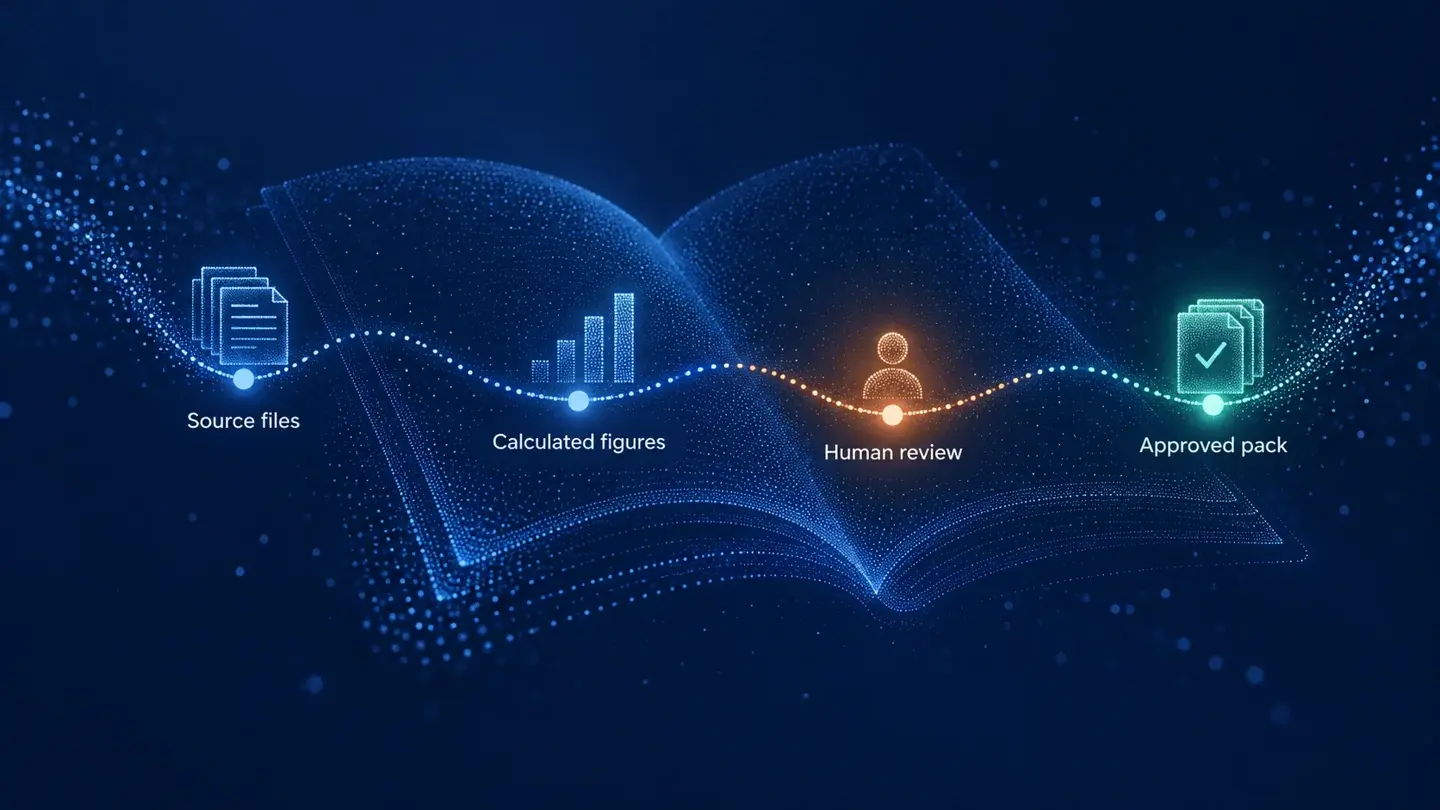
Claude in Excel for the month-end pack: what AI prepares and finance signs

AI meeting notes: the client file workflow for UK firms