AI Total Cost of Ownership: What UK Mid-Market Companies Actually Spend on AI in 2026
Gartner expected 30% of generative AI projects to be abandoned after the demo by the end of 2025, often on cost. The bill you miss is not the licence, it is the run. A UK mid-market guide to AI total cost of ownership.
By Ivan Pylypchuk (opens in a new tab), CEO of Softblues
By the end of 2025, Gartner expected at least 30% of generative AI projects to be abandoned after the proof of concept, with escalating cost and unclear business value named among the main reasons (Gartner, Jul 2024). The projects that die rarely die because the model does not work. They die because nobody budgeted for what comes after the demo.
Most AI budgets are written around the licence and the build. The real bill arrives later: integration, data work, change management, and the running cost of keeping the thing reliable. If you are a mid-market operations or finance leader planning an AI programme in 2026, this is the number you actually need. Total cost of ownership, not the sticker price.
Key facts
- Gartner expected at least 30% of generative AI projects to be abandoned after proof of concept by the end of 2025, citing poor data quality, weak risk controls, escalating cost, and unclear value (Gartner, Jul 2024).
- A majority of organisations misestimate AI costs by more than 10%, and nearly a quarter underestimate them by 50% or more (Gartner generative AI research, 2025).
- Among infrastructure and operations leaders, integration difficulty (48%) and budget (50%) were the top barriers to AI adoption (Gartner, Oct 2025).
- 92% of companies plan to increase AI investment over the next three years, yet only about 1% describe themselves as mature (McKinsey, Mar 2025).
What is total cost of ownership for an AI project?
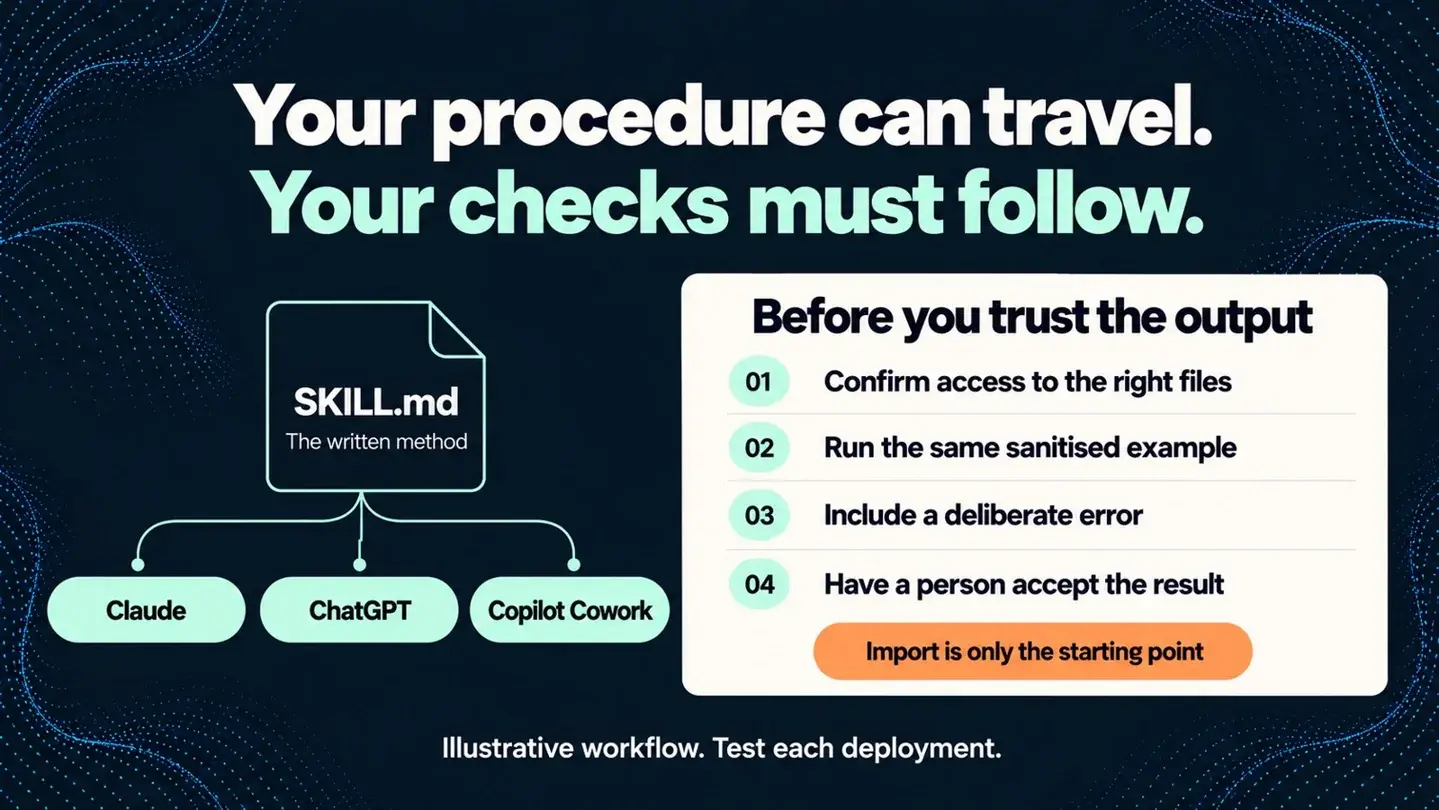
Total cost of ownership (TCO) is everything you spend to get an AI capability live and keep it working across its useful life. The licence and the initial build are the visible part. The rest sits in six buckets that a demo never shows you.
Think of the difference between the price of a car and the cost of running one. The forecourt price is the model licence. The running cost is fuel, insurance, servicing, and the mechanic you call when something breaks. For AI, the running cost is where most of the money goes, and it is the part most plans leave out.
Where does the money actually go?
Six cost centres decide the real figure. Only the first is usually in the budget.
1. Licences and compute. The model subscription or API usage, plus any hosting and inference cost. Predictable, and usually the smallest line once a system runs at scale.
2. Build and configuration. Designing the workflow, writing the prompts and tools, connecting the model to your systems. This is the number most vendors quote.
3. Integration. Wiring AI into the tools your team already uses: your CRM, finance system, document store, and identity provider. Integration difficulty is the most cited technical barrier to adoption, named by 48% of infrastructure and operations leaders (Gartner, Oct 2025).
4. Data work. Cleaning, structuring, and governing the data the model reads. Poor data quality was one of the reasons Gartner gave for projects being abandoned after the proof of concept (Gartner, Jul 2024).
5. Change management. Training, new process design, and the time your team spends adopting the tool. AI that nobody uses returns nothing, which is why we wrote a separate playbook on why teams don't use the AI they bought.
6. Run and maintain. Monitoring, oversight, prompt and model updates, and re-testing when a supplier ships a new version. This is recurring, and it never stops while the system is live.
How much should a mid-market AI project cost?
There is no single figure, and anyone who gives you one without seeing your systems is guessing. What we can be honest about is the shape of the spend.
The pattern we see, and the pattern the market reports, is that the build is a minority of the lifetime cost. The recurring lines (integration upkeep, data governance, oversight, and maintenance) accumulate every year the system runs. That is why a project that looks cheap at proof of concept can quietly become the most expensive thing on the roadmap: the build was funded, the run was not.
For concrete UK day rates and project ranges, we keep an honest breakdown in our guide to AI consulting costs in the UK, and Claude-specific licence and rollout numbers in our Claude Enterprise pricing guide. Use those for the visible lines, then add the five recurring buckets above.
| Cost line | When you pay it | Usually in the budget? |
|---|---|---|
| Model licence and compute | Ongoing | Yes |
| Build and configuration | One-off | Yes |
| Integration to your systems | Build, then ongoing upkeep | Rarely in full |
| Data cleaning and governance | Ongoing | Rarely |
| Change management and training | Launch, then ongoing | Almost never |
| Monitoring and maintenance | Ongoing | Almost never |
These are the costs. Our AI ROI calculator for your whole firm shows the other side: the time that comes back, what it is worth and when it pays for itself.
Why do so many companies get the number wrong?
The sticker price is easy to see and the running cost is not. A majority of organisations misestimate their AI costs by more than 10%, and nearly a quarter underestimate by 50% or more (Gartner generative AI research, 2025). The gap is almost always the recurring lines.
There is a second reason. Most companies layer AI on top of a process they never redesigned. McKinsey found that only about a fifth of organisations using generative AI have redesigned any workflows, even though workflow redesign correlates most strongly with actual financial impact (McKinsey, Mar 2025). Bolting AI onto a broken process keeps all the old cost and adds a new one.
How to budget so the project survives
A few practical moves keep the total cost honest and the project alive past the demo.
Cost the run, not the demo. Put a number against all six buckets before you approve the build, and treat integration, data, and maintenance as recurring.
Start where the payback is clear. A tightly scoped first use case with a measurable saving funds the next one. Running a real proof of concept that reaches production is the difference between a line item and a dead pilot.
Redesign the process, don't paper over it. The saving comes from changing how the work flows, not from adding a model to yesterday's steps.
Build reuse into the plan. The second and third use cases should share the integration and data work you already paid for. We run our own company this way, one connected setup with many workflows on top, which is what our Claude operating system case study describes.
Who this matters most for
Regulated and document-heavy mid-market teams feel TCO first, because their recurring lines are the largest. Finance, legal, and operations functions carry ongoing data governance and oversight cost that a consumer chatbot never has. If that is you, our business process automation work is built around exactly these lines: connect once, automate the workflow, and keep the running cost visible from day one.
Frequently asked questions
What is included in AI total cost of ownership?
The model licence and compute, the build and configuration, integration to your existing systems, data cleaning and governance, change management and training, and ongoing monitoring and maintenance. The last four are recurring and the most commonly missed.
Why is the build only part of the cost?
The build is a one-off. Integration upkeep, data governance, oversight, and maintenance recur every year the system runs, so over a multi-year life they typically outweigh the initial build.
How much do UK mid-market companies spend on AI projects?
There is no single figure. Costs depend on how many systems you integrate, the state of your data, and how much of the workflow you redesign. Our AI consulting costs guide gives honest UK day rates and project ranges for the visible lines.
Why do so many AI projects fail after the proof of concept?
Gartner attributes it to poor data quality, weak risk controls, escalating cost, and unclear business value. Most of these are TCO problems: the run was never costed (Gartner, Jul 2024).
How do we avoid underestimating the cost?
Budget all six cost centres before approving the build, treat integration, data, and maintenance as recurring, and design the first use case to reuse its setup for the next.
Does redesigning our process reduce the cost?
It improves the return. McKinsey found workflow redesign correlates most strongly with financial impact, yet only about 21% of companies have done it (McKinsey, Mar 2025).
Where should a mid-market company start?
With one scoped use case that has a clear, measurable saving, built so its integration and data work carry over to the next workflow.
Softblues is an OpenAI Select Partner, Certified in the Claude Partner Network, a Google Cloud partner at Services Select tier, and a member of the Microsoft AI Cloud Partner Program. We use it before we sell it: we run our own company on the same AI systems we build for clients, so our cost estimates come from having paid these bills ourselves. For a worked comparison of what each path really costs for 120 seats, with the licence line and the consumption line separated, the platform guide has the table.
If you want a total cost of ownership you can take to a board, book a discovery call.
Work out your numbers
Your whole firm
AI ROI calculator
Five questions about your firm. See the time AI frees up, what it is worth and when it pays for itself.
Work out your numbersOne key process
Process automation ROI calculator
Five questions about one process. See the hours an AI agent frees up, what they are worth and how much becomes profit.
Work out your numbers
Free. No sign-up. Your answers stay in your browser.
See it in production
Systems we have built and run for clients, with the numbers that came out of them.
Related Articles
MCP server access: Claude, ChatGPT and Copilot in Microsoft 365
AI governance framework: a UK employee policy template