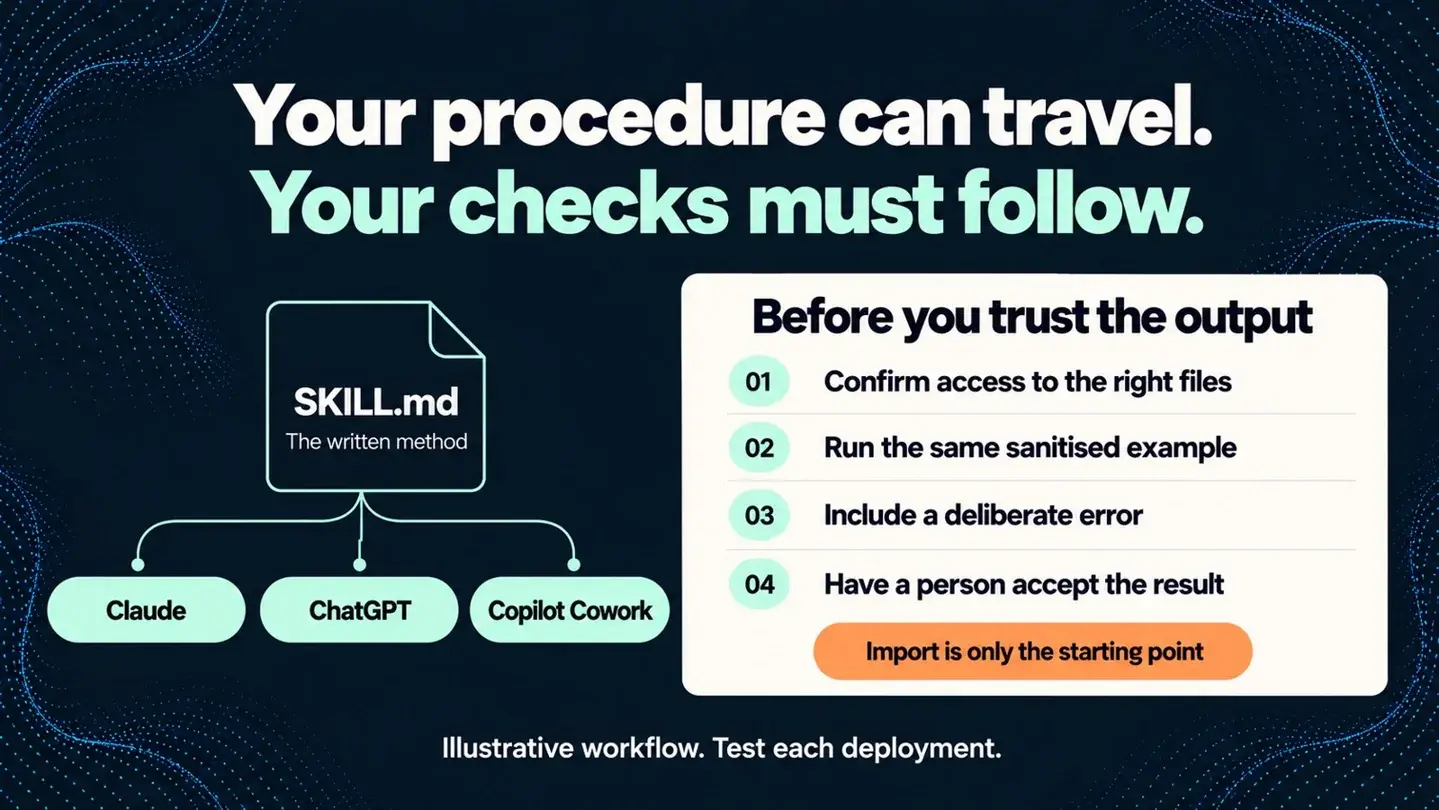
Best AI Development Companies in the UK (2026): Custom AI, Agents and Software
One in six UK businesses use AI, but only 7% have built anything agentic. Here is how to tell an AI development company that ships production software from one that ships a demo.
By Ivan Pylypchuk (opens in a new tab), CEO of Softblues
Roughly one in six UK businesses now use AI, but only 7% of adopters have deployed anything agentic (DSIT AI Adoption research, 2025). Most companies are typing into a chat window. Very few have built software that actually does the work. That gap is exactly where an AI development company earns its fee, and it is also where most of the money gets wasted.
If you are shopping for a partner to build custom AI, agents, or a chatbot, the hard part is not finding vendors. It is telling apart the firms that ship production software from the ones that ship a slide deck and a proof of concept that never leaves the demo.
This guide is not a ranked list of logos. Rankings go stale and rarely match your specific need. Instead, it explains the four categories of AI development work, what "good" looks like in each, the questions that expose weak vendors, and how to read a proposal so you can build your own shortlist.
What does an AI development company actually build?
"AI development company" covers four quite different jobs. A firm strong in one is not automatically strong in the others, so match the category to what you need before you compare anyone.
1. Custom AI software. End-to-end applications with AI at the core: a document-processing pipeline, an internal search tool over your own data, a scoring or triage engine. This is software engineering first and model work second. You are buying a team that can design, build, test, and run a real system, not just call an API.
2. AI agents and MCP development. Systems that take actions across your tools, not just answer questions. An agent might read an email, look something up in your CRM, draft a reply, and log the outcome. The Model Context Protocol (MCP) is the emerging standard for connecting models to those tools safely. This is the newest and least mature category, which is why only a small share of adopters have shipped it.
3. Chatbots and conversational assistants. Customer-facing or internal assistants that answer from your knowledge base. The engineering is usually lighter, but the risk sits in accuracy, guardrails, and handoff to a human when the bot is out of its depth.
4. Generative AI features. AI dropped into an existing product: drafting, summarising, classification, content generation. Here you are extending your own roadmap, so the fit with your existing codebase and data matters more than raw model choice.
How do you tell a builder from a slide-deck vendor?
The single most useful signal is whether a firm can show you software running in production, on real data, for a real client. Proof of concepts are cheap. Systems that survive contact with messy inputs, edge cases, and security review are not.
We are a small, senior, delivery-first team rather than a large consultancy, so this is the lens we use ourselves. Our own company runs on Claude across sales, delivery, and operations, which we wrote up honestly in the Softblues Claude Operating System case study, including the parts that were harder than expected. When a food producer asked us to check an AI-built application, we ran a full audit and secure rebuild rather than papering over it, documented in the Claude Code audit case study.
Signs of a genuine builder. Named engineers on your project, not a rotating bench. A working reference you can actually speak to. A clear line from your problem to a maintainable system. Honesty about what AI cannot yet do reliably.
Warning signs. A demo that only ever runs on clean, hand-picked data. Vague team composition. Big adjectives and no numbers. A proposal that ends at the proof of concept with no plan for production, monitoring, or handover.
What engagement models do AI development companies offer?
The commercial shape matters as much as the technical skill. Here are the common models and where each fits.
| Model | Best for | Watch out for |
|---|---|---|
| Fixed-price project | A well-defined build with clear scope | Scope that is still fuzzy, so you pay for every change request |
| Time and materials | Exploratory work where scope will move | Weak delivery discipline; insist on sprint demos and a cap |
| Proof of concept, then build | Testing feasibility before committing | A PoC with no agreed path (and price) to production |
| Staff augmentation | You have a team and need AI-fluent engineers | A body who cannot work independently in your stack |
| Retained / managed | Ongoing model, prompt, and pipeline maintenance | Paying a retainer for a system that is essentially finished |
For most mid-market companies, a small fixed-scope build with an agreed production phase gives the best balance of certainty and momentum. Staff augmentation makes sense when you already have engineers and just need AI-fluent hands alongside them.
Which category fits regulated and mid-market teams?
If you operate in finance, legal, or healthcare, the category you need is usually custom AI software or agents, not an off-the-shelf chatbot, because the value sits in your private data and the risk sits in governance. The right partner will talk about data residency, access control, audit logs, and human review before they talk about the model.
A worked example: a financial-advice firm we worked with wanted its monthly compliance file review handled more consistently. The interesting design work was not the model. It was deciding what the system was allowed to decide, what always went to a human, and how every step was logged. That thinking is in the compliance file review case study (a discovery-stage engagement, not a live deployment).
Five questions that separate the shortlist
Ask every candidate the same five questions and compare the answers side by side.
1. Show me something you built that is in production. Not a demo, not a prototype. A system with real users and real data. Ask what broke and how they fixed it.
2. Who exactly will work on this? Get names and seniority. Confirm they are not swapped out after the sale.
3. How does this get to production and who maintains it? A real plan covers testing, monitoring, security review, and handover, with a price attached.
4. What will this not do well? A serious partner names the limits. Anyone who says AI can do everything is selling, not building.
5. How do you handle our data? Where it lives, who can see it, whether it trains anyone's model, and how access is logged. In regulated sectors this is the whole conversation.
How Softblues fits
We build custom AI, agents, and MCP integrations for UK and Ireland mid-market teams, and we are Certified in the Claude Partner Network and a Google Cloud partner at Services Select tier. We are practitioners, not a consultancy: senior engineers, production-first, and honest about what AI can and cannot do yet. If you want a broader view of the market first, our guides on the best AI consulting companies in the UK and on AI integration services are a good next read.
If you would rather just talk through what you are trying to build, book a discovery call.
Frequently asked questions
What is the difference between an AI consulting firm and an AI development company?
A consulting firm advises on strategy and selection; a development company builds and ships the software. Some firms do both, but they are different skills. If you already know what you want built, prioritise the builder.
How much does custom AI development cost in the UK?
It depends heavily on scope, from a small fixed-scope build to a multi-phase system. We break down realistic UK figures in our guide to AI consulting costs in the UK. Be wary of any quote given before the outcome is defined.
Should I build custom AI or buy an off-the-shelf tool?
Buy when a standard tool fits your process closely. Build when the value depends on your own data or workflow, which is common in regulated and mid-market operations.
What is MCP and do I need it?
The Model Context Protocol is a standard for connecting AI models to your tools and data. You need it when you want an agent to take actions across systems rather than just answer questions.
How long does an AI build take?
A focused first build is often measured in weeks, not months, when scope is tight. Longer timelines usually signal unclear scope rather than technical difficulty.
How do I know if a vendor's proof of concept will make it to production?
Ask for the production plan and price up front. If the proposal stops at the PoC, treat production as unscoped and unbudgeted.
Can an AI development company work alongside my existing engineers?
Yes, through staff augmentation. The test is whether their engineers can work independently in your stack and lift your team's AI fluency rather than creating a dependency.
Work out your numbers
Your whole firm
AI ROI calculator
Five questions about your firm. See the time AI frees up, what it is worth and when it pays for itself.
Work out your numbersOne key process
Process automation ROI calculator
Five questions about one process. See the hours an AI agent frees up, what they are worth and how much becomes profit.
Work out your numbers
Free. No sign-up. Your answers stay in your browser.
See it in production
Systems we have built and run for clients, with the numbers that came out of them.
Related Articles
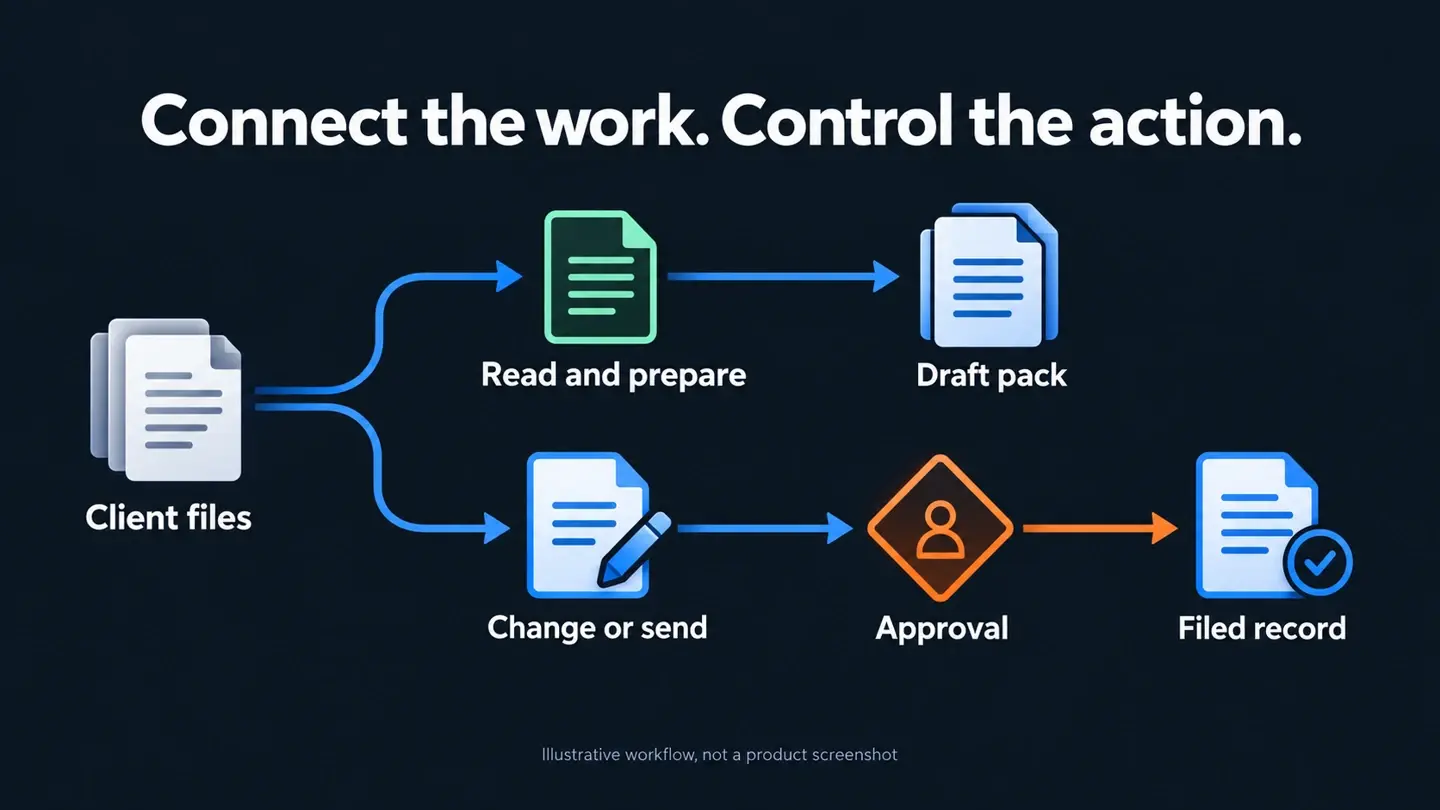
MCP server access: Claude, ChatGPT and Copilot in Microsoft 365
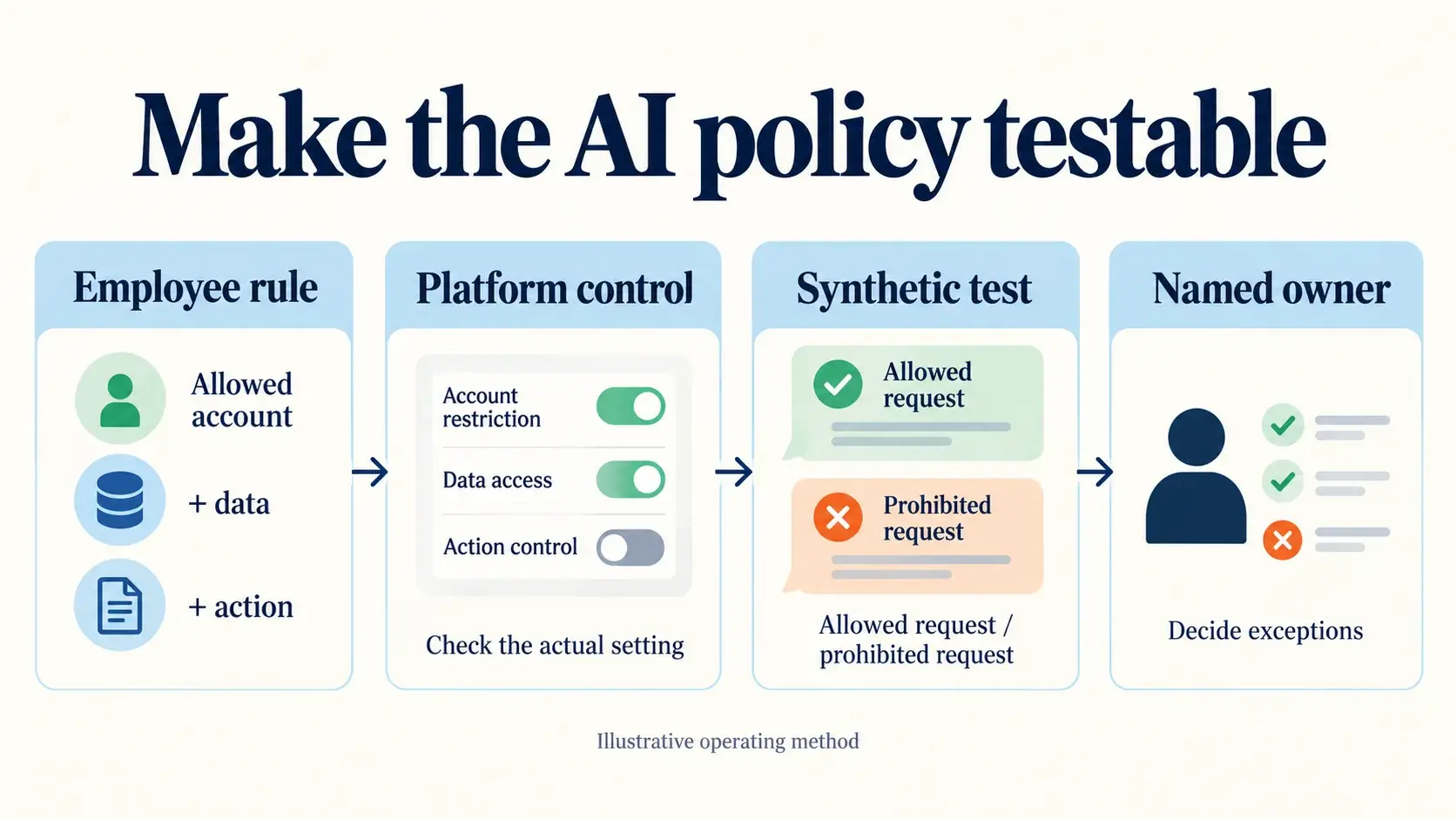
AI governance framework: a UK employee policy template