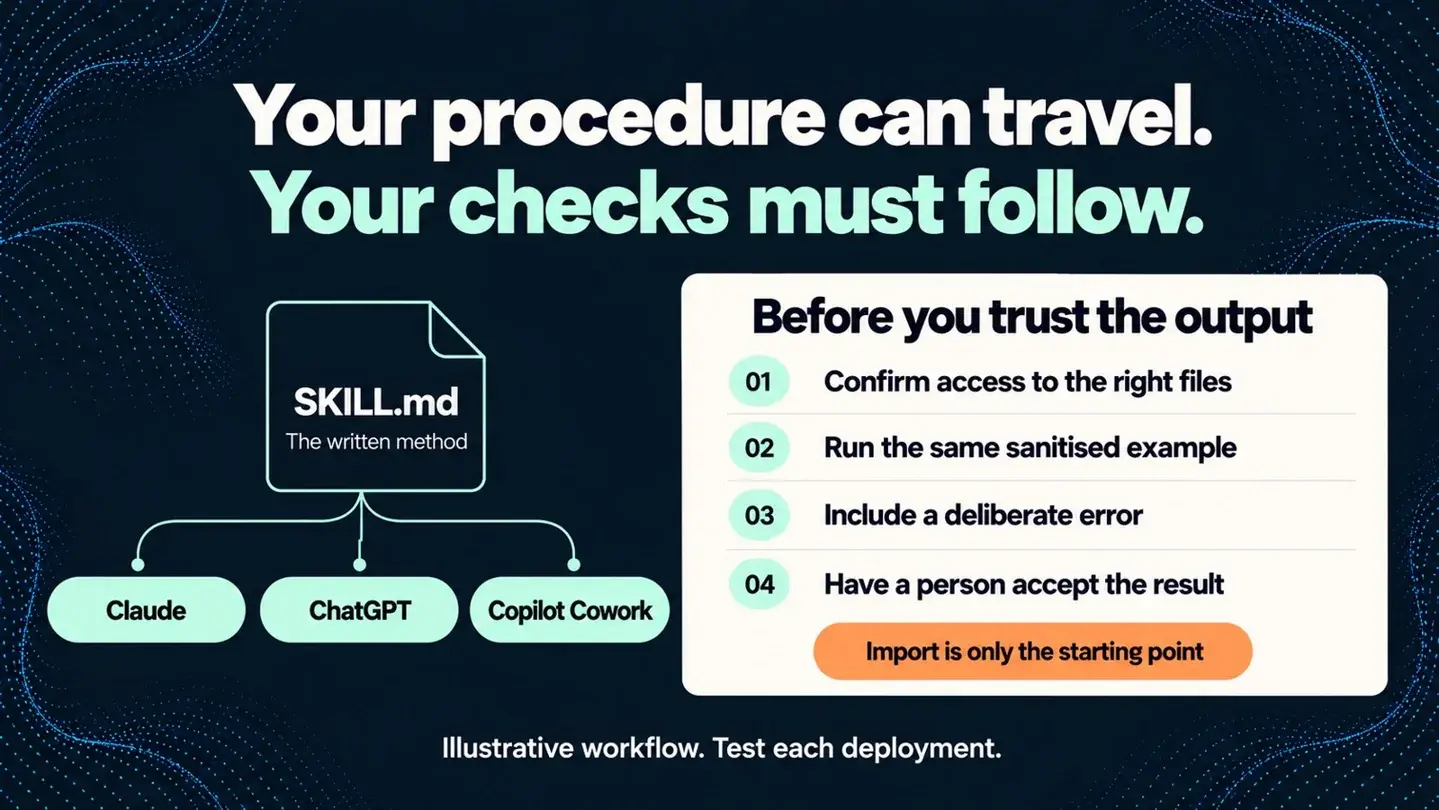
Best Claude AI Agent and MCP Development Companies (UK & Ireland)
The Model Context Protocol hit 97M monthly downloads and 10,000+ active servers in a year. Here is how to choose a Claude AI agent and MCP development company in the UK and Ireland, and spot agent washing.
By Ivan Pylypchuk (opens in a new tab), CEO of Softblues. We build Claude agents and MCP integrations for finance, legal and healthcare teams across the UK and Ireland.
The Model Context Protocol crossed 97 million monthly SDK downloads and more than 10,000 active public servers within a year of launch, and in December 2025 Anthropic donated it to a new Agentic AI Foundation under the Linux Foundation, co-founded with OpenAI and Block (Anthropic, Dec 2025). MCP is now the plumbing that lets an AI agent reach into your systems. So the firms that can build on it well are suddenly worth finding.
There is no single best Claude AI agent or MCP development company in the UK and Ireland. The right builder depends on what you are trying to ship: a bounded internal agent, a customer-facing one, or a whole MCP layer connecting your tools. This is a buyer's guide. It explains what these firms actually do, sets out the types, and gives you criteria to judge any of them, including us.
At Softblues, which is Certified in the Claude Partner Network and builds Claude agents for regulated mid-market companies across the UK and Ireland, we spend as much time telling clients not to build an agent as we do building one. So use the red flags below on every firm you talk to. They apply to us too.
Key facts
- MCP passed 97M+ monthly SDK downloads and 10,000+ active public servers in its first year, with first-class support across Claude, ChatGPT, Cursor, Gemini, Microsoft Copilot and VS Code (Anthropic, Dec 2025).
- In December 2025 MCP was donated to the Agentic AI Foundation under the Linux Foundation, giving it vendor-neutral governance, backed as platinum members by AWS, Google, Microsoft, Bloomberg and Cloudflare alongside the co-founders (Anthropic, Dec 2025).
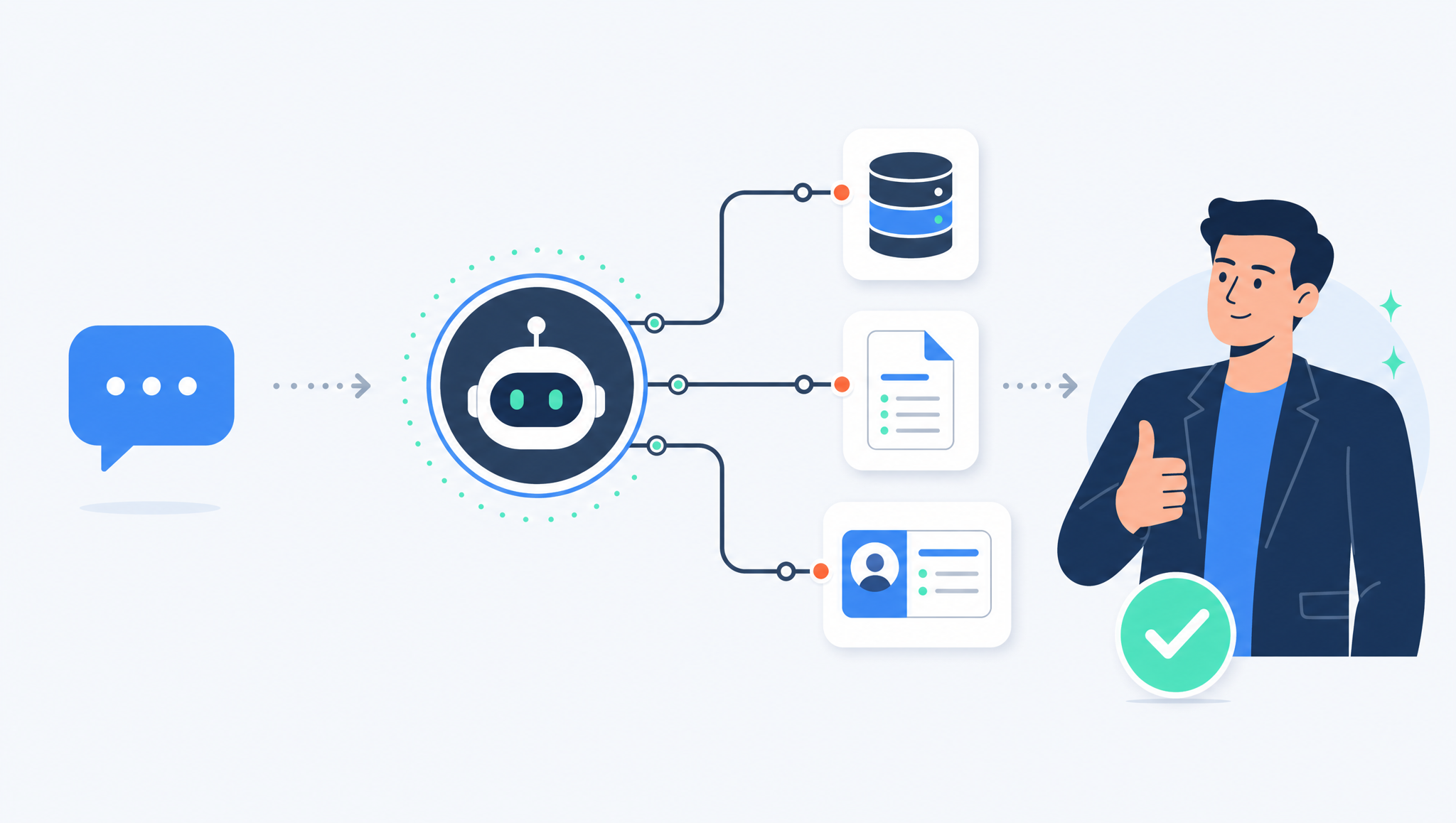
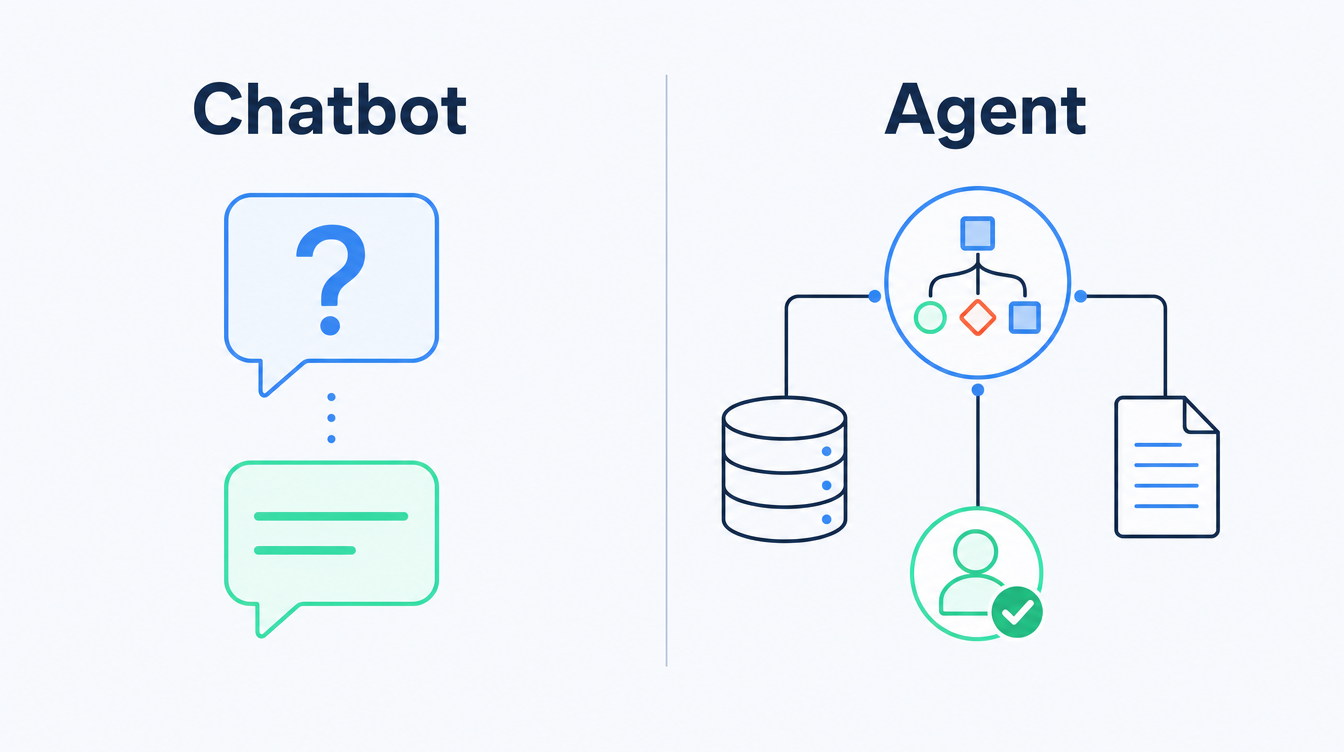
- An agent is not a chatbot. A chatbot answers; an agent decides its own steps and acts across your tools. Anthropic's line: with a workflow you own the plumbing, with an agent the model owns it (Anthropic, 2024).
- Most agent projects still fail on governance, not models. Gartner expects over 40% of agentic AI projects to be cancelled by the end of 2027 (Gartner, Jun 2025).
- Agent washing is real. Ask what the agent actually decides and which tools it can touch. A demo that only answers questions is a chatbot with better marketing.
- Disclosure: Softblues is our own company, listed under specialist agent builders below and judged by the same criteria as everyone else.
Who this is for, and who it isn't
This is for a product, operations or IT leader at a 50 to 500-person UK or Irish company who wants to build a Claude-powered agent or connect their tools over MCP, and needs to choose a builder.
It is not for someone shopping for an off-the-shelf chatbot, and it is not a developer's MCP tutorial. If you want to understand which agent use cases actually reach production before you hire anyone, start with our guide to enterprise AI agents that ship, then come back to choose a builder.
What does a Claude AI agent and MCP development company do?
These firms design, build and maintain two related things. The first is agents, systems where Claude directs its own steps and tool use to complete a task. The second is the MCP layer those agents run on, the standard connections that let a model read from and write to your systems of record.
The work is less about the model and more about everything around it: defining a narrow job the agent can actually do, wiring it to your tools over MCP with the right permissions, putting a human gate on any consequential step, and evaluating outputs before and after launch. IDC research finds around 88% of AI pilots never reach production. The builders worth hiring are the ones who get you into that other 12%.
Agent, chatbot or MCP integration: what are you actually buying?
Three things get sold under the same banner. Knowing which you need saves months.
A chatbot answers questions from a knowledge base. Useful, bounded, low risk. If that is all you need, you do not need an agent-development firm.
An agent decides and acts. It reads a case, drafts the response, updates the record, and flags the exception for a human. Anthropic's own distinction is the clean one: with a workflow you own the orchestration, with an agent the model owns it (Anthropic, 2024).
An MCP integration is the connective tissue. It is a server that exposes one of your systems, a CRM or a document store or a database, to any MCP-capable model in a standard way. Build the MCP layer once and every agent and assistant you add later plugs into it.
Why does MCP matter for choosing a builder?
Before MCP, every tool connection was bespoke and brittle. Now there is one open standard, governed neutrally under the Linux Foundation and adopted across every major AI platform (Anthropic, Dec 2025). For a buyer, that changes the maths. A builder who works in MCP is building on portable infrastructure, not locking you into their own glue code.
So a fair question for any agent-development firm is simple: do you build your integrations as MCP servers? If the answer is a proprietary connector, you own a dependency on that firm. If it is MCP, you own an asset that outlives the engagement.
What types of Claude agent and MCP builder exist?
Match the type to the job before you compare individual names.
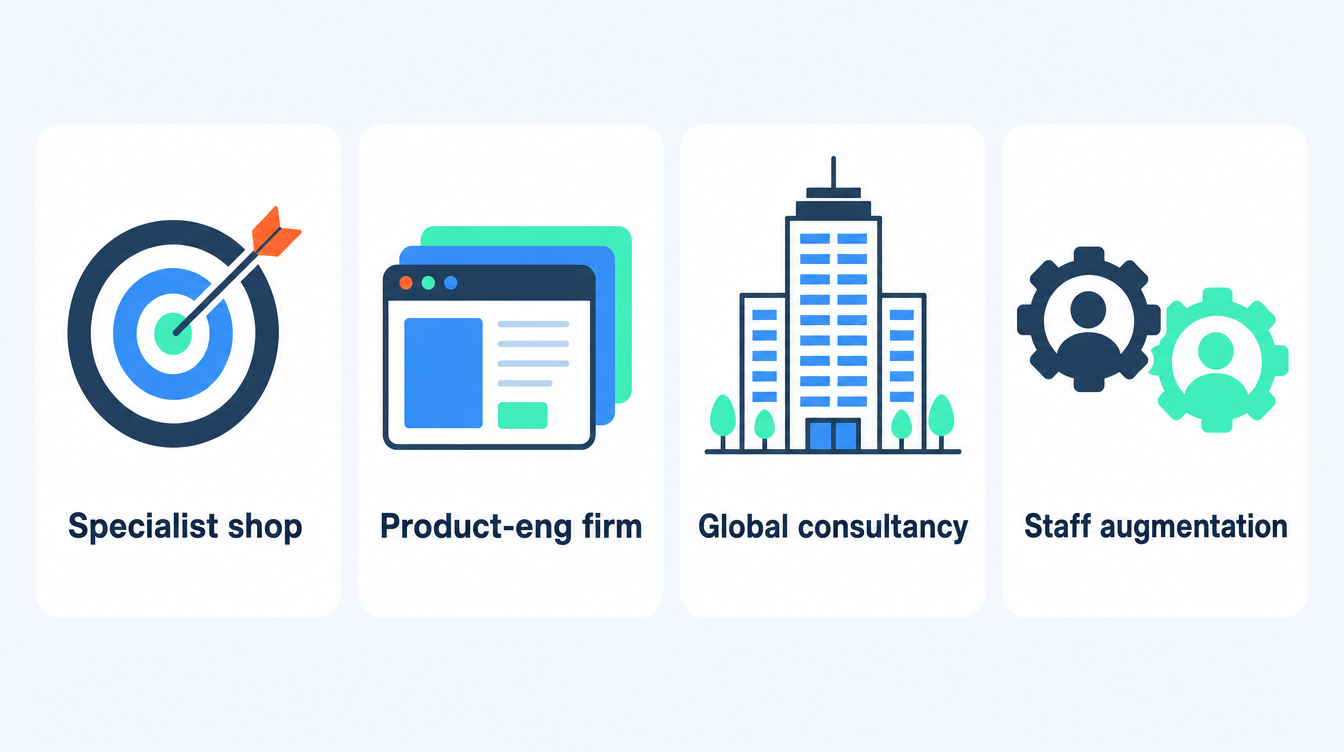
1. Specialist agent and MCP shops. Small, AI-native firms that do this as their core craft. This is where Softblues sits. Best for a bounded, high-value agent in a regulated setting with named accountability. Avoid if you need a large multi-team programme run for you.
2. Product-engineering and app-dev firms. Broader software teams adding agent capability. Best if the agent is one feature inside a bigger build. Avoid if the agent is the hard part and they treat it as an afterthought.
3. Global consultancies with agent practices. The large firms building Claude practices at scale. Infosys, for example, is building Claude-powered agents for specific industries (Anthropic, Mar 2026). Best for enterprise-wide, multi-country rollouts. Avoid if you want one agent live this quarter.
4. Staff-augmentation firms. Engineers who join your team to build agents alongside you. Best when you have the strategy and need capacity. Avoid if you need someone to own the outcome, not just the code.
Builder types compared
| Builder type | Best for | Avoid if | Proof to ask for |
|---|---|---|---|
| Specialist agent / MCP shop | Bounded, high-value agent, fast | You need a large multi-team programme | A live agent in production, MCP servers they built |
| Product-engineering firm | Agent as one feature in a bigger build | The agent is the hard part | Evidence they've shipped an agent, not just apps |
| Global consultancy | Enterprise-wide, multi-country | You want one agent live this quarter | Named industry agents in production |
| Staff augmentation | Adding capacity to your own team | You need someone to own the outcome | Engineers' Claude certifications, code samples |
What are the red flags in an agent builder?
- Everything is an "agent". If the demo just answers questions from documents, it is a chatbot. Ask what it decides and which systems it can change.
- Proprietary connectors, not MCP. Glue code you can't take with you is a lock-in you'll regret. Prefer builders who ship MCP servers you own.
- No human gate on consequential steps. The agents that get cancelled are open-ended and high-consequence with nobody signing off. A serious builder designs the gate in from day one.
- No evaluation story. "It works in the demo" is not a metric. Ask how they measure the agent's outputs before and after go-live, and who reviews the failures.
What questions should you ask?
- Is what I need a chatbot, an agent, or an MCP integration, and why?
- Do you build integrations as MCP servers I own, or as your own connectors?
- Which agents do you have running in production today, and one in my sector?
- Where is the human gate, and what happens when the agent is unsure?
- What do I own at the end: the code, the MCP servers, the evaluations?
We answer these the same way we built our own systems. Our Claude Code audit case study shows how we audit and secure an AI-built application before it ever touches production, and our AI integration services guide covers connecting AI to the systems you already run. For choosing the wider firm behind the agent, see our companion guide to Claude implementation partners in the UK.
Frequently asked questions
What is the difference between a Claude agent and a chatbot?
A chatbot answers questions. An agent decides its own steps and acts across your tools: reading a system, taking an action, and escalating the exception. Anthropic frames it as this: with a workflow you own the orchestration, with an agent the model owns it (Anthropic, 2024).
What is MCP and why should I care?
The Model Context Protocol is the open standard for connecting AI models to your systems. It passed 97M+ monthly SDK downloads and 10,000+ active servers in a year and is now governed neutrally under the Linux Foundation, so building on it means portable integrations rather than vendor lock-in (Anthropic, Dec 2025).
Do I need MCP to build a Claude agent?
Not strictly, but it is the sensible default. An agent needs to reach your tools, and MCP is the standard way to expose them, adopted across every major platform. A builder who ignores it is choosing a harder, more brittle path.
Why do so many agent projects fail?
Rarely the model. They fail on governance, data readiness and observability, which is why Gartner expects over 40% of agentic projects to be cancelled by the end of 2027 (Gartner, Jun 2025). A good builder narrows the job and gates the risky steps.
Can a small UK or Ireland firm build a production Claude agent?
Yes. Bounded agents in regulated settings suit a focused specialist with named accountability better than a large programme. Judge the firm on agents in production and MCP servers they've shipped, not headcount.
Is Softblues an agent builder?
Yes. Softblues builds Claude agents and MCP integrations and is Certified in the Claude Partner Network. We've listed ourselves under specialist builders above and asked you to judge us by the same criteria as everyone else.
Choosing an agent builder is a judgement about what the thing actually decides, whether you own the integrations, and who signs off the risky step. Anthropic and the Linux Foundation have made the infrastructure open. Make sure the firm you hire hands you an asset, not a dependency.
Softblues is an OpenAI Select Partner, Certified in the Claude Partner Network, a Google Cloud partner at Services Select tier, and a member of the Microsoft AI Cloud Partner Program. We use it before we sell it: we build Claude agents and MCP integrations for regulated teams, and we tell you when not to. For a sense of scope before you brief anyone, the implementation guide lays out the eleven worked examples and what each costs to build, from an afternoon's setup to a four-month build.
If you are choosing a builder for a UK or Ireland project, book a discovery call.
Work out your numbers
Your whole firm
AI ROI calculator
Five questions about your firm. See the time AI frees up, what it is worth and when it pays for itself.
Work out your numbersOne key process
Process automation ROI calculator
Five questions about one process. See the hours an AI agent frees up, what they are worth and how much becomes profit.
Work out your numbers
Free. No sign-up. Your answers stay in your browser.
See it in production
Systems we have built and run for clients, with the numbers that came out of them.
Related Articles
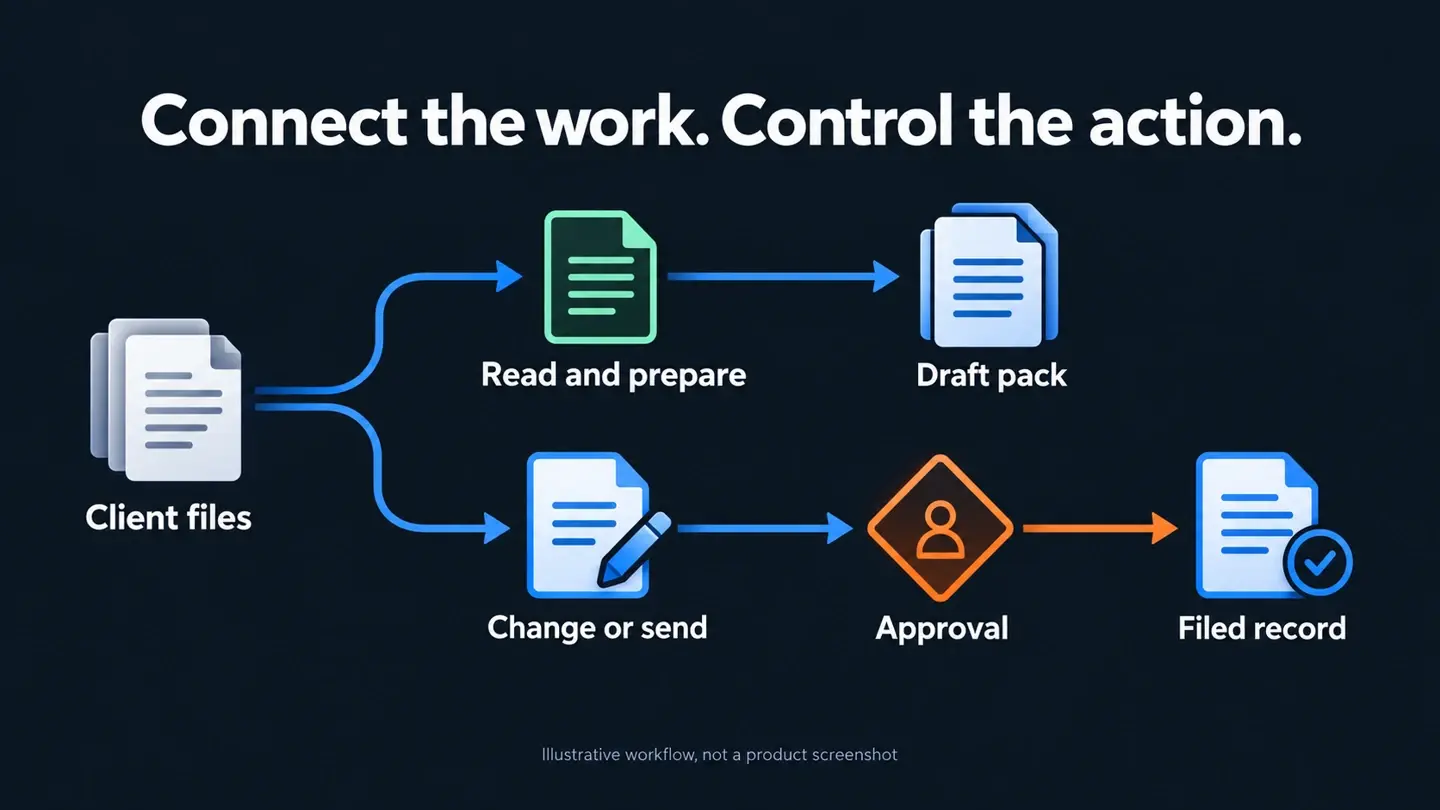
MCP server access: Claude, ChatGPT and Copilot in Microsoft 365
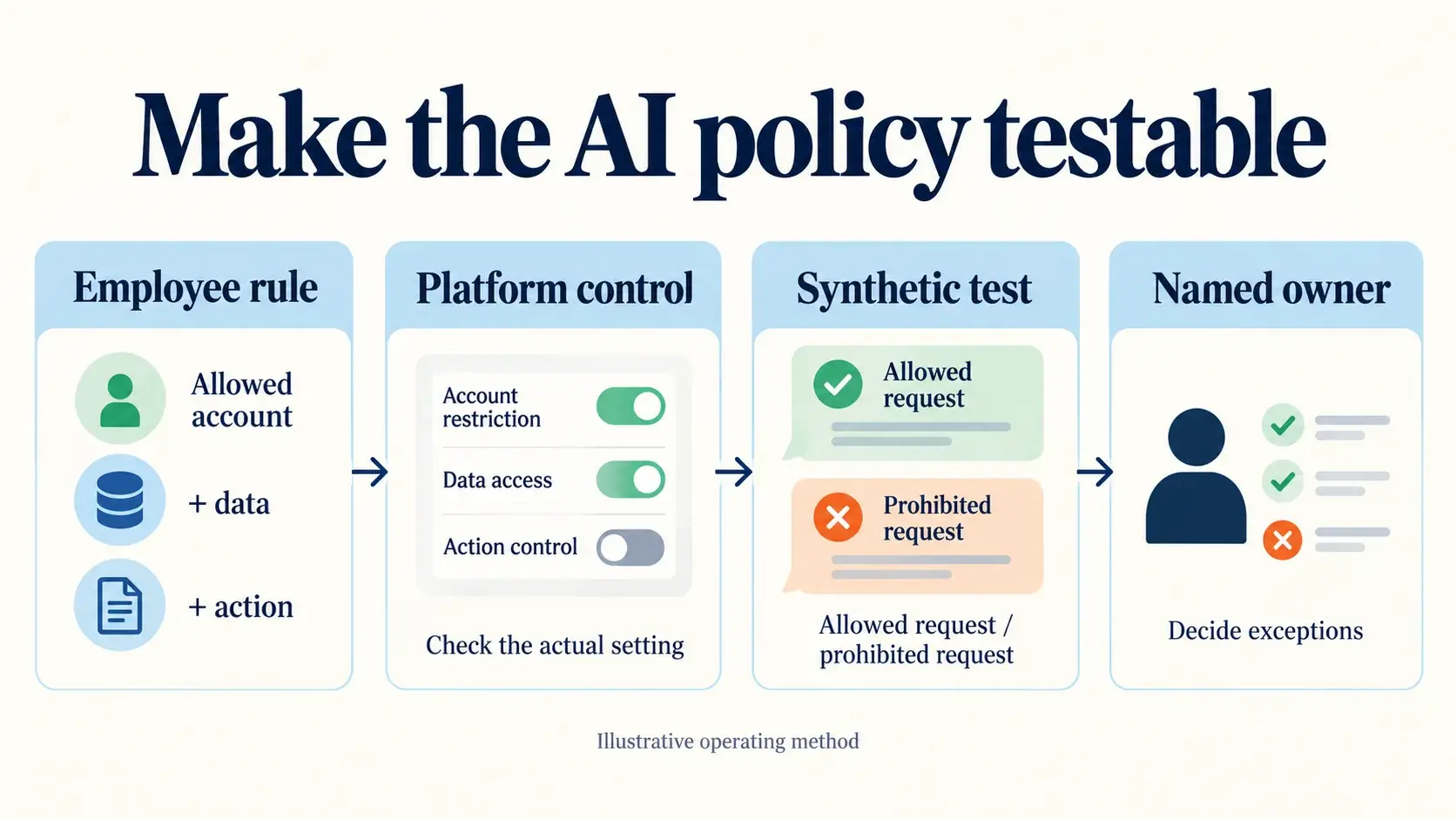
AI governance framework: a UK employee policy template