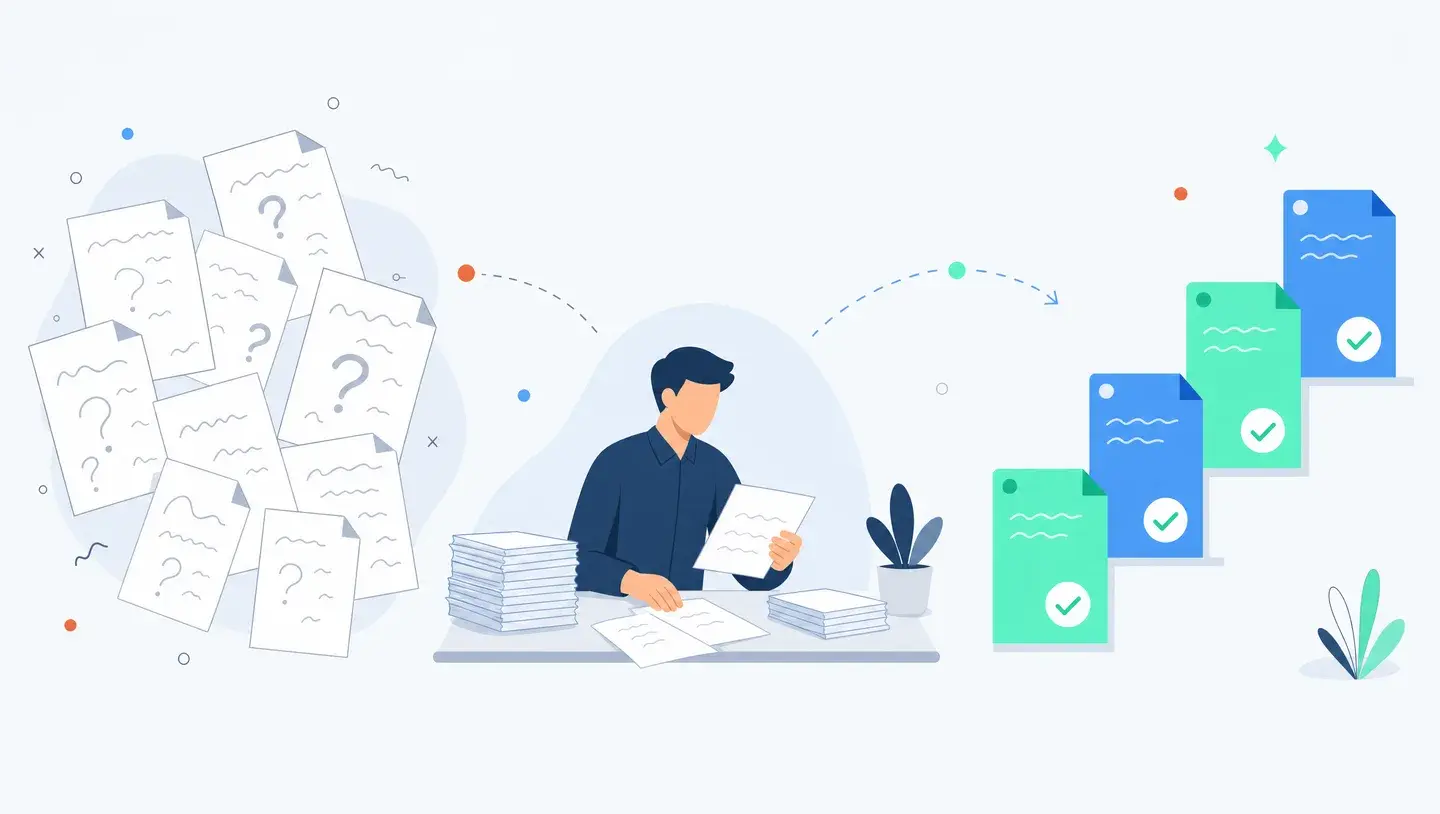
AI Agents vs RPA: Which Should Mid-Market Operations Teams Use in 2026?
Gartner expects over 40% of agentic AI projects to be cancelled by 2027, often because teams chose an AI agent where a rules-based robot would have done. How mid-market operations teams should decide between AI agents and RPA.
By Ivan Pylypchuk (opens in a new tab), CEO of Softblues. Has led Claude and automation projects for finance, legal and healthcare teams across the UK and Ireland.
Gartner expects more than 40% of agentic AI projects to be cancelled by the end of 2027, citing escalating costs, unclear business value and weak controls (Gartner, June 2025). A large share of those failures start with the same mistake: reaching for an autonomous AI agent to do a job a rules-based robot would have done more cheaply and reliably.
For a mid-market operations team, the choice between AI agents and RPA is not about which technology is newer. It is about matching the tool to the work. At Softblues, an AI consulting firm working with regulated mid-market companies across the UK and Ireland, we spend most of a discovery call separating the tasks that need reasoning from the tasks that just need repeating. This guide gives you that same decision framework.
Key facts
- RPA (robotic process automation) runs fixed, rules-based steps across systems. It is reliable and cheap to run, but it breaks when the input or the screen changes.
- AI agents use a large language model to read messy inputs, decide what to do, and take actions. They handle variation and judgement, but they cost more per task and need guardrails.
- Gartner expects over 40% of agentic AI projects to be cancelled by end of 2027 (Gartner, June 2025), mostly for unclear value rather than the technology itself.
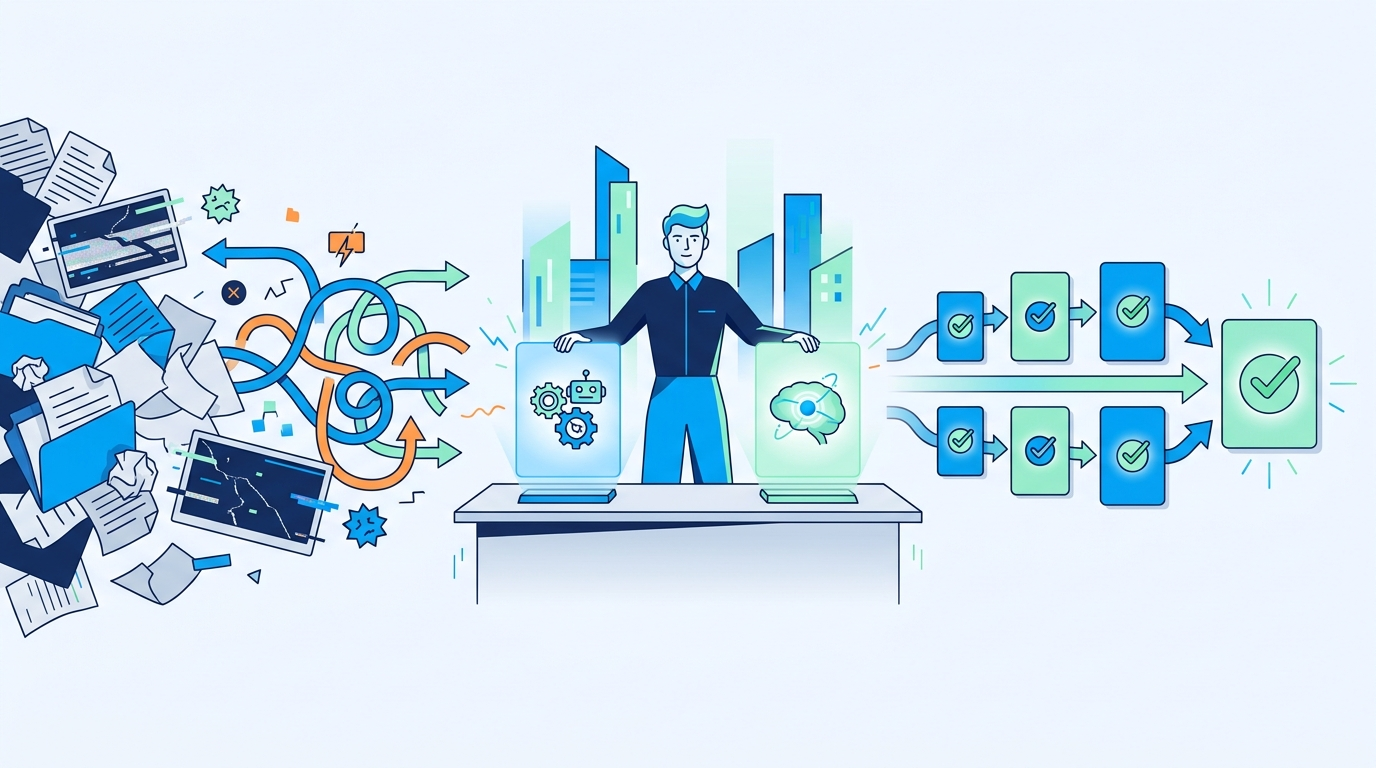
- The right answer for most mid-market operations is both: RPA for the deterministic plumbing, an agent for the step that reads and decides.
- Start from the process, not the tool. A task with clear rules and structured data points to RPA; a task with free text, exceptions and judgement points to an agent.
Who this is for, and who it isn't
This is for an operations, finance or IT lead at a 50–500-person UK or Ireland company who has a backlog of manual processes and is trying to decide whether to buy an RPA platform, build with AI agents, or both.
It is not a technical build guide, and it is not for a solo founder wanting a weekend script. If you already run RPA at scale and want to add reasoning to specific steps, skip to the section on running them together.
What is the difference between AI agents and RPA?
RPA automates a process by recording and replaying a fixed sequence of clicks, keystrokes and API calls. It follows rules you define in advance. Give it the same input and it does the same thing every time. That determinism is its strength for high-volume, stable work such as moving invoice data between Sage and a bank portal, or reconciling two spreadsheets overnight.
An AI agent works differently. It is given a goal and a set of tools, and it uses a model such as Claude to interpret an input, plan the steps, and act: reading an email, extracting the relevant fields, checking them against a policy, then routing or replying. It copes with variation that would break a script: a supplier who phrases every invoice differently, a customer email that buries the actual request in three paragraphs of context.
The short version: RPA repeats decisions you have already made; an agent makes the decision.
When should mid-market teams use RPA?
Use RPA when the process is stable, the inputs are structured, and the rules rarely change. RPA pays back fastest on high-volume, low-variation work where a person is currently acting as a copy-paste bridge between two systems that do not talk to each other.
Good RPA candidates share three traits: the data arrives in a predictable format, the logic can be written as if-then rules, and the process runs often enough that saved minutes add up. Overnight reconciliation, bulk data entry, report generation from a fixed template, and moving records between a CRM and an ERP are classic wins.
When should mid-market teams use AI agents?
Use an AI agent when the work needs reading comprehension, judgement, or handling of exceptions that you cannot fully specify in advance. Agents earn their keep on unstructured inputs (email, documents, chat, PDFs) and on tasks where the "rule" is really a policy that a human currently interprets.
Examples we see across UK mid-market operations: triaging and routing an inbox where every message is phrased differently, first-pass review of a contract or claim against a checklist, turning a call transcript into structured CRM updates, or drafting a reply that a person then approves. In each case the input varies, so a fixed script cannot cover every path, but the underlying decision is repeatable enough to hand to a model with clear instructions and a human check.
The trade-offs are cost and control. An agent call costs more than an RPA step, and because it reasons rather than replays, you need guardrails: a defined scope, a human approving anything consequential, and logging so you can see what it did and why.
AI agents vs RPA: a side-by-side comparison
| RPA | AI agents | |
|---|---|---|
| Best for | High-volume, stable, rules-based tasks | Unstructured input, exceptions, judgement |
| Input it handles | Structured (forms, tables, fixed screens) | Messy (email, documents, chat, PDFs) |
| How it decides | Follows rules you pre-define | Reasons from a goal and instructions |
| Cost to run | Low per task | Higher per task (model calls) |
| Fails when | The screen, form or format changes | Scope is vague or there is no human check |
| Set-up effort | Map the steps, build the script | Define the goal, tools, guardrails and review |
| Avoid if | The task needs reading or judgement | The task is simple, stable and rules-based |
The row that matters most for a business case is "fails when". RPA fails on change; agents fail on ambiguity. Your job in scoping is to work out which risk your process carries.
Can you use AI agents and RPA together?
Yes, and for most mid-market operations that is the strongest design. Gartner notes the two are converging rather than competing: it expects a majority of RPA vendors to add model-driven "computer use" capabilities to their platforms over the next few years. The practical pattern is to let RPA do the deterministic plumbing and hand the single step that needs reading or judgement to an agent.
A worked example from our own UK engagements (an anonymised order-to-schedule process for a secure logistics operator, indicative, 2026): orders arrived by email in no fixed format. An agent read each email, extracted the delivery details and flagged anything unusual for a human; RPA then took the structured output and created the job in the scheduling system and updated the customer record. The agent handled the variation at the front; RPA handled the repetitive writes at the back. Neither tool could have done the whole job well on its own. You can see how we approached that in our secure logistics order-to-schedule case study.
What does this cost, and how long does it take?
The honest answer is that the numbers depend on the process, but the shape is predictable. RPA has lower run costs and higher maintenance; agents have higher run costs and lower brittleness. Here is how we frame a first project.
| Approach | Typical first project | Main ongoing cost | Payback driver |
|---|---|---|---|
| RPA only | Automate 1–2 stable, high-volume processes | Script maintenance when systems change | Hours saved on repetitive copy-paste |
| Agent only | Automate one judgement-heavy step with a human check | Model usage per task | Faster handling of unstructured work |
| Agent + RPA | Split one end-to-end process across both | Model usage + light script upkeep | End-to-end cycle time, fewer handoffs |
(All framing above is our engagement model, not a published benchmark. We scope it in a paid discovery and give you the timeline and the price in the proposal before any build starts.)
Whichever you choose, the case rests on the hours it frees. Our process automation ROI calculator shows what an AI agent would free up in one of your processes, and when it pays for itself.
What are the red flags when choosing?
1. A vendor who leads with the technology, not your process. If nobody has asked to see the actual work before recommending agents or RPA, they are selling a licence, not a solution.
2. "Agents for everything." Autonomy is not free. Using an agent for a task that is stable and rules-based adds cost and a failure mode for no benefit.
3. No human in the loop on consequential steps. For regulated work such as finance under the FCA, legal under the SRA or healthcare under the CQC, an agent should draft and a person should approve. Anyone promising full autonomy on a compliance-sensitive task is a risk.
4. No plan for when it breaks. Ask who fixes the RPA script when a portal changes, and who reviews the agent's decisions. If there is no answer, the maintenance cost lands on you.
Questions to ask on the call, and what a good answer sounds like
1. "Which steps of my process are rules, and which need judgement?" A good partner answers by walking your actual process, not by naming a product.
2. "Where would you use RPA here, and where an agent, and why?" You want a specific split with reasons, not "we'd use AI for all of it".
3. "How do you keep a human in control of the risky steps?" Look for named approval points and logging, especially in regulated work.
4. "What happens when a system changes or the agent gets it wrong?" A good answer covers monitoring, maintenance ownership and a rollback path.
If you want to see how we scope this in practice, read our guide to where mid-market operations should start with automation and our view on what to automate first in the back office.
Frequently asked questions
Is RPA dead now that AI agents exist?
No. RPA is mature and reliable for stable, rules-based, high-volume work, and it is usually cheaper to run than an agent for those tasks. Gartner expects RPA and agentic capabilities to converge, with RPA platforms adding model-driven features rather than being replaced.
Are AI agents just RPA with a chatbot on top?
No. RPA replays steps you have defined; an agent interprets an input, plans and acts using a model. An agent handles variation and judgement that would break a fixed script. They solve different problems and often work best together.
Which is cheaper, RPA or AI agents?
Per task, RPA is usually cheaper to run because it does not call a model each time. Agents cost more per task but remove the maintenance and brittleness that RPA carries on variable inputs. The cheaper option depends on how much your inputs vary.
Do I need to replace my existing RPA to add AI?
Usually not. The common pattern is to keep RPA for the deterministic steps and add an agent for the one step that needs reading or judgement, so your existing investment keeps working.
Are AI agents safe for regulated processes?
They can be, with the right design: a defined scope, a human approving consequential actions, and full logging. For FCA, SRA or CQC-regulated work, an agent should draft and a person should approve. Never remove the human from a compliance-sensitive decision.
How do I know which one my process needs?
Map the process step by step and label each step "rules" or "judgement". Structured, rules-based, high-volume steps point to RPA; steps with free text, exceptions or interpretation point to an agent. Most real processes need both.
How long before it pays back?
For a well-scoped first process, payback usually comes from saved handling time and fewer handoffs rather than headcount. We scope a working version in a paid discovery, with the timeline and the price in the proposal, so you can measure the return before scaling.
Softblues is an OpenAI Select Partner, Certified in the Claude Partner Network, a Google Cloud partner at Services Select tier, and a member of the Microsoft AI Cloud Partner Program. We are practitioners, not slide-deck consultants: we scope the process, split it between RPA and agents where that is the right design, and give you the timeline and the price in the proposal before any build starts. If you want a straight answer on whether your process needs an agent, RPA, or both, book a discovery call.
Work out your numbers
One key process
Process automation ROI calculator
Five questions about one process. See the hours an AI agent frees up, what they are worth and how much becomes profit.
Work out your numbersYour whole firm
AI ROI calculator
Five questions about your firm. See the time AI frees up, what it is worth and when it pays for itself.
Work out your numbers
Free. No sign-up. Your answers stay in your browser.
See it in production
Systems we have built and run for clients, with the numbers that came out of them.
Related Articles
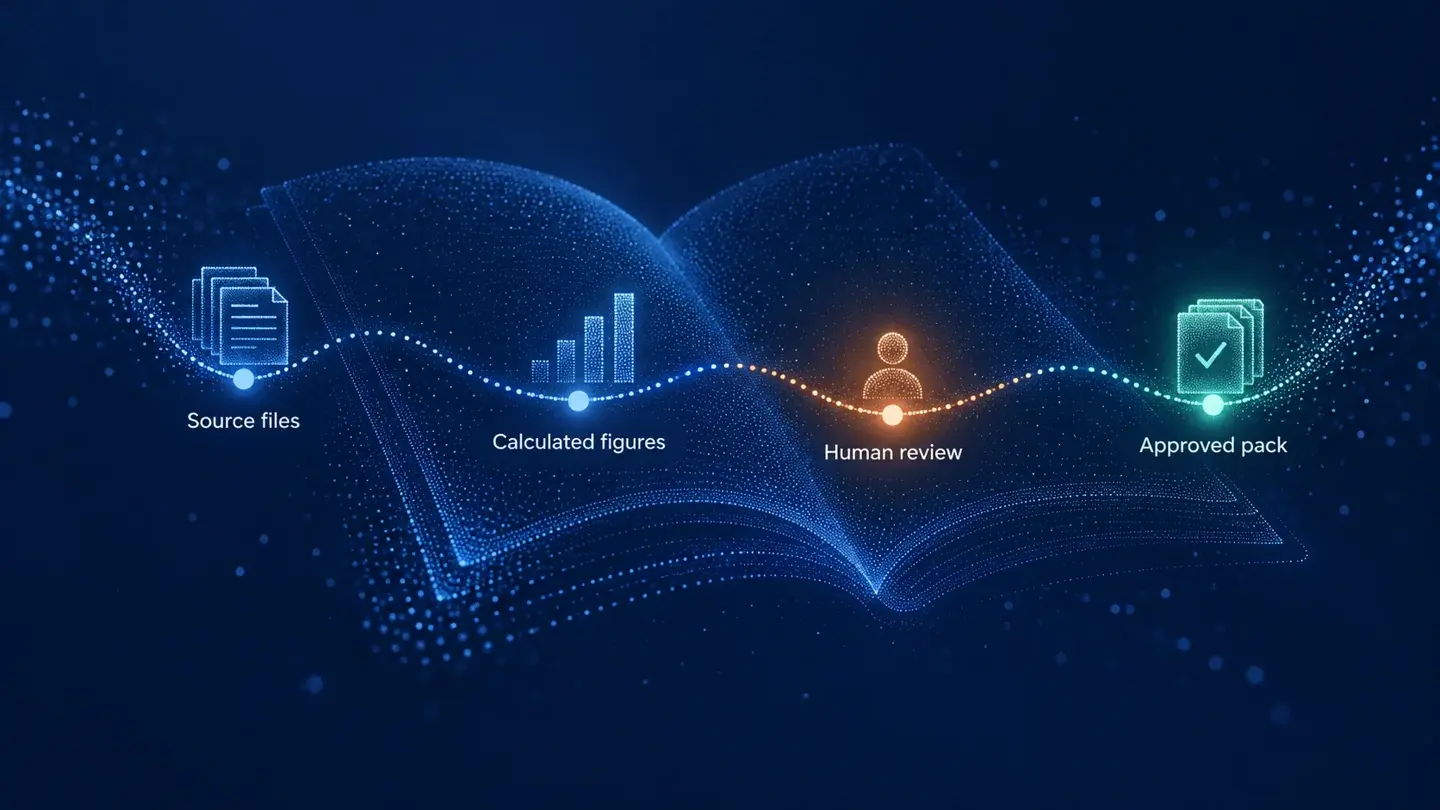
Claude in Excel for the month-end pack: what AI prepares and finance signs

AI meeting notes: the client file workflow for UK firms